
Physicl, a startup that builds simulated 3D worlds to train robots, has raised $10 million in seed funding led by Inovia Capital, according to TechCrunch and The Next Web. The round was announced on Friday, November 6.
The problem it targets. Robots learn from data, and real-world robot data is slow and expensive to collect. Physicl generates synthetic data, such as a cup on a cluttered counter or in shadow, so that models can practice on difficult edge cases. Alex de Vigan, the founder and chief executive, said something was missing in AI, according to TechCrunch.
The founder’s background. De Vigan previously ran nfinite, which spent a decade building tools that let brands and retailers create 3D models of goods for online display. Generative AI shifted that company toward generative imagery, according to TechCrunch. Other coverage says Physicl reuses nfinite’s 3D pipeline for its new purpose, and that nfinite raised $100 million in 2022.
The product. Physicl’s first product is Studio, which the company says has 10,000 3D environments and 100,000 assets. Another report says it is free during its beta. TechCrunch says the company focuses on post-training, the stage in which a model is refined on hard cases after its main training, and sees itself as tooling for continuing synthetic data generation, not only a data provider.
An early customer. SpAItial, a company building world models, was an early customer, and it used the platform for its Echo-3 model, which was released last week. SpAItial’s founder Matthias Niessner, who is also a robotics professor at the Technical University of Munich, said the real challenge is that the data has to be curated by hand, according to TechCrunch. Other reports name additional partners such as Nvidia and Amazon Web Services, which the TechCrunch article does not.
The crowded field. De Vigan acknowledged that the space is very young and sometimes very blurry, according to TechCrunch. Several startups and large companies are working on simulation for robots, so Physicl will have to show that its data improves results for customers.
What is not stated. TechCrunch does not give the company’s valuation, other investors besides Inovia, founding date or pricing, and no measured results for customers are reported. Other coverage lists US Venture Partners as a participant, and sources differ on whether the company is based in Paris, San Francisco or both.
Why it matters. Progress in robotics depends on data as much as hardware, and simulated data can be produced at a scale that real robots cannot match. If synthetic scenes can teach robots to handle messy real settings, it could speed up the use of robots in warehouses and homes. The open question is how well training in simulation carries over to the real world.
Sources: TechCrunch and The Next Web. Details are as reported by those outlets and the company.
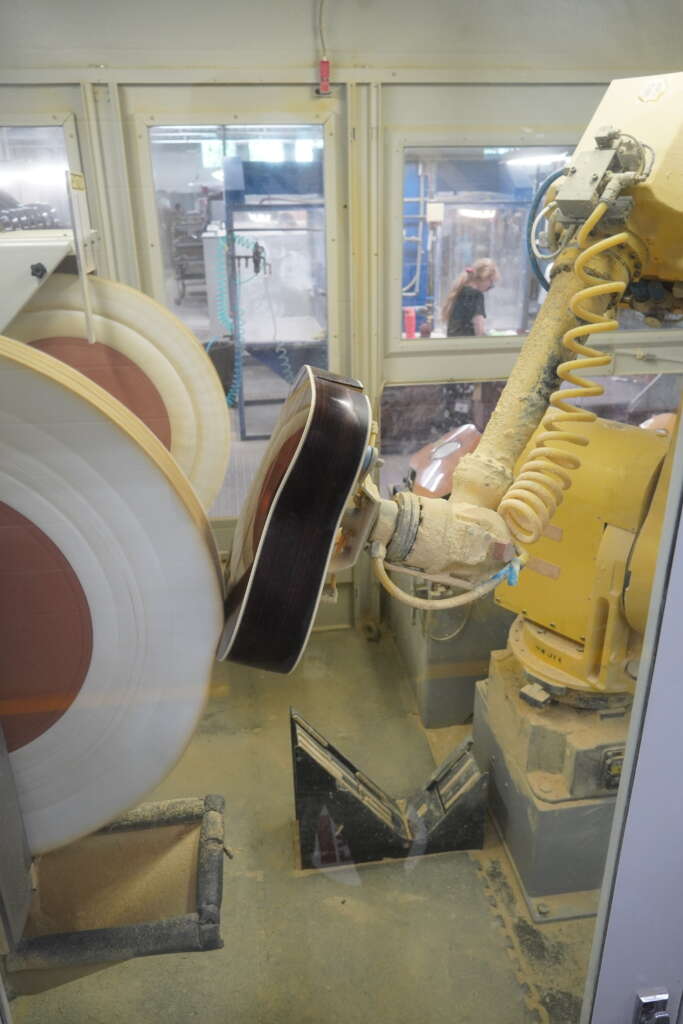
Robotic arm at a factory (representative image), Wikimedia Commons, CC BY 4.0