AI shopping agents are a hot topic, but at DoorDash they barely register. On the company’s third-quarter earnings call, CEO Tony Xu said DoorDash is seeing maybe several hundred orders in total from third-party AI agents, according to TechCrunch. Ars Technica also ran the story under a headline saying outside agents have led to only hundreds of orders so far.
The size of the gap. Xu made the comment in response to an analyst’s question. TechCrunch notes that DoorDash’s 2025 report says the company completes an average of 3 million deliveries per day. Set against that, several hundred orders in total from outside agents is a tiny fraction. Most customers still order through DoorDash’s own app.
Which agents. TechCrunch names Muse, Instinct and Fo among the third-party agents, along with others. Xu called agent-based ordering a very dynamic area and said the company should not ignore the trend but also should not overstate it.
What DoorDash is doing about it. The company says it wants to learn about agentic use cases and build relationships with the makers of third-party agents. Xu also suggested that advertising inside these agents could become an opportunity later. DoorDash has launched its own AI tools too, according to TechCrunch: a command-line agent introduced in July 2026, a chatbot called Ask DoorDash launched in June 2026 that takes orders through prompts and photos, a text-to-order agent launched in September 2026, and a connector for ordering from other chatbots that is aimed at corporate ordering.
The wider fight over agents. TechCrunch adds that websites are still deciding whether to let AI agents access their content. Amazon blocks personal agents, while Walmart has welcomed them as a way to win business from competitors. DoorDash’s position sits between the two: open to agents, but not counting on them yet.
Why it matters. Much of the talk about AI assistants buying things for people assumes that shoppers will hand over the task. The first hard number from a large delivery platform suggests that, for now, the habit has barely started. That matters for businesses planning around agent traffic, and for investors deciding how much weight to put on it. It also shows why companies are building their own assistants first: they control the experience and keep the customer relationship.
What to watch. Look for whether the number of agent orders grows in the next quarter, whether DoorDash starts selling ads inside agents, and how other platforms such as Uber and Amazon report their own agent traffic.
Sources: TechCrunch and Ars Technica (headline). Figures are as reported on DoorDash’s earnings call by those outlets.
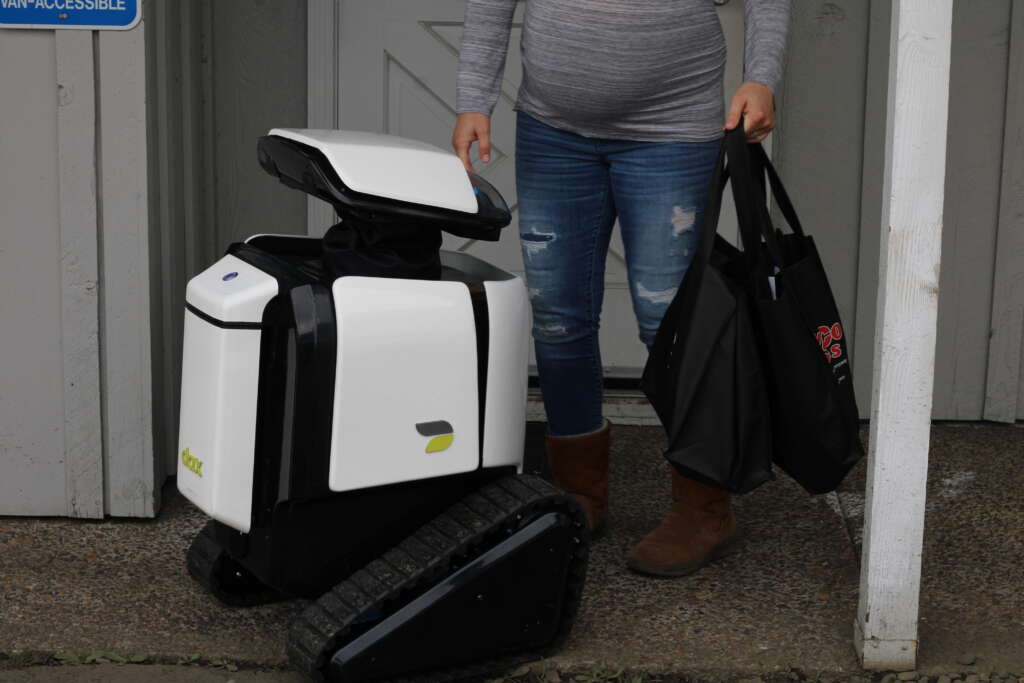
Delivery robot with groceries (representative image), Wikimedia Commons, CC BY-SA 4.0