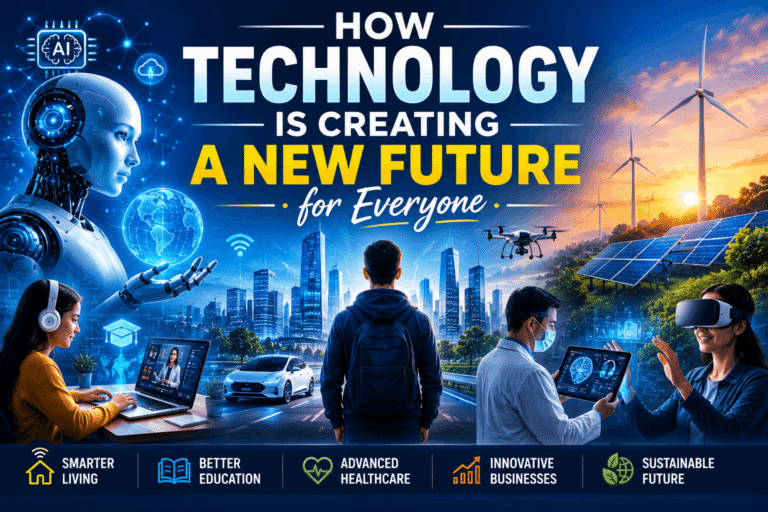
Artificial Intelligence (AI) is no longer a futuristic concept found only in science fiction movies. Today, AI has become an essential part of everyday life for millions of people worldwide. From voice assistants and personalized shopping recommendations to healthcare innovations and smart business solutions, Artificial Intelligence in Daily Life is transforming how people live, work, and interact with technology.
Both the United States and India are experiencing rapid growth in AI adoption. Businesses, educational institutions, healthcare providers, and governments are investing heavily in AI technologies to improve efficiency, productivity, and innovation. As AI continues to evolve, its impact on society becomes increasingly significant.
In this article, we explore how AI is changing daily life, its benefits, challenges, and what the future holds for people across the USA and India.
Understanding Artificial Intelligence
Artificial Intelligence refers to computer systems designed to perform tasks that typically require human intelligence. These tasks include learning, reasoning, problem-solving, language understanding, and decision-making.
Modern AI systems use advanced algorithms and machine learning techniques to analyze large amounts of data and make predictions or recommendations. This capability allows AI to improve continuously as it processes more information.
Today, AI powers many technologies that people use daily, often without realizing it.
AI in Everyday Life
Smart Assistants and Communication
One of the most visible examples of Artificial Intelligence in Daily Life is the use of smart assistants such as Siri, Google Assistant, and Alexa. These tools help users perform tasks like setting reminders, checking weather updates, making calls, and controlling smart home devices.
AI also improves communication through language translation services and predictive text features. This is especially beneficial in diverse countries like India, where multiple languages are spoken, and in the USA, where businesses often operate globally.
Personalized Entertainment
Streaming platforms use AI to recommend movies, TV shows, and music based on user preferences. Services like Netflix, Spotify, and YouTube analyze viewing and listening habits to create personalized experiences.
As a result, users spend less time searching for content and more time enjoying entertainment tailored to their interests.
Online Shopping and E-Commerce
AI has revolutionized online shopping by helping businesses understand customer behavior. E-commerce platforms use AI algorithms to recommend products, predict buying patterns, and improve customer service through chatbots.
Consumers in both India and the USA benefit from personalized shopping experiences that save time and improve purchasing decisions.
AI in Education
Education is one of the sectors experiencing significant transformation through AI technology.
Personalized Learning
AI-powered learning platforms can adapt educational content based on a student’s strengths and weaknesses. This personalized approach helps students learn at their own pace and improves academic outcomes.
In India, AI-based educational tools are helping students access quality learning resources, even in remote areas. In the USA, schools and universities are integrating AI into classrooms to enhance teaching effectiveness.
Virtual Tutors
AI-driven virtual tutors provide students with instant assistance and explanations. These systems are available 24/7, allowing learners to study whenever they need support.
This technology makes education more accessible and affordable for millions of students worldwide.
AI in Healthcare
Healthcare is another area where Artificial Intelligence in Daily Life is making a major impact.
Early Disease Detection
AI systems can analyze medical images, patient records, and diagnostic data to identify diseases at an early stage. Early detection often leads to better treatment outcomes and reduced healthcare costs.
Improved Patient Care
Hospitals and clinics use AI to streamline administrative tasks, schedule appointments, and manage patient information more efficiently.
In both the USA and India, healthcare providers are adopting AI solutions to improve patient experiences and reduce the workload on medical professionals.
Drug Development
AI accelerates drug discovery by analyzing vast amounts of scientific data. This process helps researchers identify potential treatments faster than traditional methods.
The rapid development of medical solutions during global health crises has demonstrated the potential of AI in advancing healthcare innovation.
AI in Business and the Workplace
Businesses across industries are embracing AI to improve operations and remain competitive.
Automation of Routine Tasks
AI can automate repetitive activities such as data entry, inventory management, and customer support. This allows employees to focus on more strategic and creative responsibilities.
Enhanced Customer Service
AI-powered chatbots and virtual assistants provide instant responses to customer inquiries. These systems improve customer satisfaction while reducing operational costs.
Data-Driven Decision Making
Organizations use AI tools to analyze market trends, customer behavior, and business performance. These insights help leaders make informed decisions and identify growth opportunities.
Companies in both India and the USA are leveraging AI to increase productivity and drive innovation.
AI in Transportation
Transportation systems are becoming smarter thanks to Artificial Intelligence.
Navigation and Traffic Management
GPS applications use AI to provide real-time traffic updates and suggest optimal routes. This reduces travel time and improves fuel efficiency.
Autonomous Vehicles
Self-driving vehicle technology continues to advance, particularly in the United States. Although fully autonomous transportation is still developing, AI is already enhancing vehicle safety through features such as lane assistance and collision detection.
Public Transportation Improvements
AI helps transportation authorities optimize routes, manage schedules, and improve passenger experiences.
As urban populations grow, smart transportation solutions will become increasingly important.
AI and Smart Homes
The concept of smart homes has gained popularity in recent years.
AI-powered devices can control lighting, security systems, air conditioning, and household appliances. These systems learn user preferences and automatically adjust settings for comfort and energy efficiency.
Smart home technology is becoming more affordable, making it accessible to a larger number of households in both developed and developing countries.
Challenges of Artificial Intelligence
While AI offers numerous benefits, it also presents several challenges.
Privacy Concerns
AI systems often require access to large amounts of personal data. Protecting user privacy and ensuring responsible data usage remain important concerns.
Job Displacement
Automation may replace certain routine jobs, leading to workforce changes. Governments and organizations must invest in skill development and workforce training to prepare employees for evolving job markets.
Ethical Considerations
Questions about fairness, transparency, and accountability in AI decision-making continue to be discussed by policymakers, researchers, and technology companies.
Responsible AI development is essential for maintaining public trust.
The Future of Artificial Intelligence
The future of AI looks incredibly promising.
Experts predict that AI will become even more integrated into everyday life. Emerging technologies such as generative AI, robotics, smart cities, and advanced healthcare solutions will continue to transform industries and societies.
In India, government initiatives and a growing technology sector are creating opportunities for AI innovation. In the United States, leading technology companies are investing billions of dollars in AI research and development.
Together, these efforts are shaping a future where AI plays a central role in economic growth, education, healthcare, and global connectivity.
Why AI Matters for Everyone
Artificial Intelligence is no longer limited to technology experts or large corporations. It affects students, professionals, business owners, healthcare workers, and consumers alike.
Understanding how AI works and how it impacts daily life can help individuals make informed decisions, adapt to technological changes, and take advantage of new opportunities.
Whether you live in New York, California, Mumbai, Delhi, or any other city, AI is becoming an essential part of modern life.
Conclusion
Artificial Intelligence in Daily Life is transforming the world at an unprecedented pace. From education and healthcare to business and transportation, AI is creating smarter solutions that improve efficiency, convenience, and innovation.
Both the USA and India are at the forefront of this technological revolution, adopting AI to solve challenges and unlock new opportunities. While concerns about privacy, ethics, and employment remain important, the benefits of AI continue to drive widespread adoption.
As technology advances, Artificial Intelligence will become even more deeply integrated into everyday activities. Individuals and organizations that embrace AI responsibly will be better positioned to thrive in the digital future.
The AI revolution is not coming—it is already here, shaping the way we live, work, learn, and connect with the world.