|
Getting your Trinity Audio player ready... |
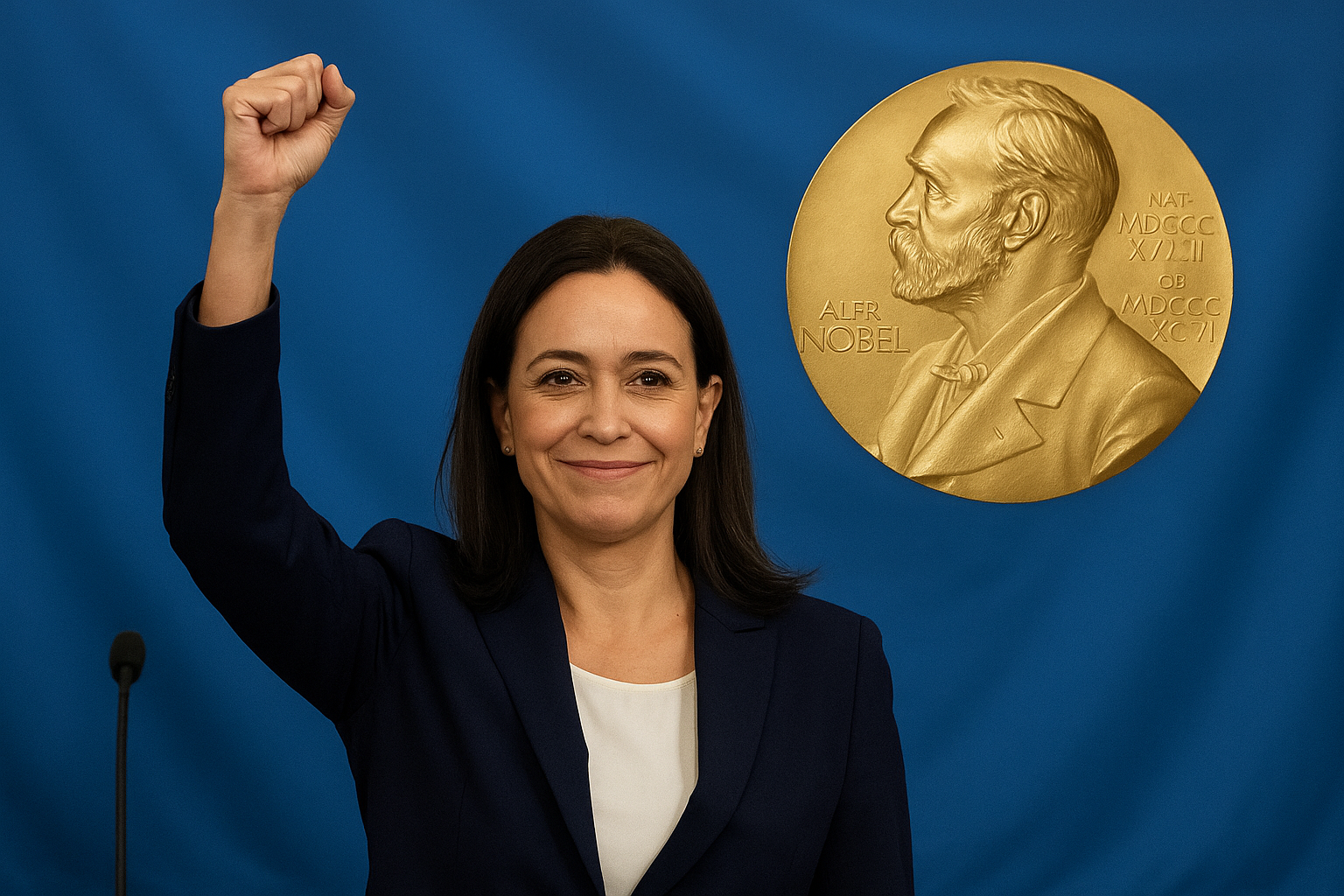
The Norwegian Nobel Committee’s selection of María Corina Machado for the Nobel Peace Prize 2025 has triggered a pronounced shift in global political attention; the decision recalibrates how the United States and Latin American nations interpret democratic resilience and civic resistance. Machado, a long-standing opposition leader from Venezuela, was recognized for her persistent advocacy for free elections, transparent governance, and human rights protection in a country that has experienced sustained institutional deterioration.
Analysts note that her award indicates a deliberate recalibration by the Nobel Committee. The institution has historically honored statesmen or organizations tied to global conflict resolution; however, the 2025 decision highlights individual democratic resistance inside authoritarian frameworks. This signals a strategic orientation toward actors confronting structural repression within Latin America. It also places Venezuela’s political crisis back at the center of international scrutiny.
Machado’s partnership with activist Ana Corina Sosa strengthened her domestic credibility. Sosa’s documentation of human rights abuses and her role in organizing civic networks provided the empirical foundation that allowed international institutions to validate claims of electoral manipulation and state intimidation. Observers from policy forums in Oslo argue that this collaborative approach offered a unique model for bottom-up democratic restoration in volatile environments.
The United States has responded with measured endorsement. Washington has used the award as a platform to reassert its stance on safeguarding democratic institutions throughout the Western Hemisphere. Officials from the State Department have framed the Nobel Peace Prize 2025 as an indicator of widespread concern regarding the erosion of civil liberties in Latin America. The award strengthens ongoing diplomatic pressure on regimes accused of suppressing political opposition.
Latin American governments are divided. Nations with strong democratic institutions have praised the Nobel Committee for elevating the voices of civil society leaders. Conversely, states aligned with Caracas have criticized the decision as foreign interference in Venezuelan internal affairs. This division demonstrates the widening ideological gap in the region. Policy researchers note that the symbolic weight of the Nobel Prize could influence voter sentiment in upcoming regional elections, particularly in countries where democratic backsliding remains a subject of debate.
Machado’s recognition also reshapes the global perception of Venezuelan political dynamics. After years of contested elections, economic instability, and mass migration, international fatigue had set in. The Nobel Prize interrupts that trajectory by renewing attention from multilateral institutions, human rights monitors, and global media. It also strengthens the legitimacy of internal opposition movements seeking peaceful political transition. Experts in Oslo have stated that the committee intended to emphasize the importance of sustained civic participation even when institutional pathways appear blocked.
Financial implications may follow. Nobel laureates often attract increased funding from democracy-promotion organizations and humanitarian networks. If channeled effectively, these resources could fortify on-ground initiatives involving voter education, documentation of state abuses, and digital security for activists. However, political scientists caution that increased visibility may expose Machado and her supporters to heightened state pressure, necessitating international monitoring.
Public reaction across major cities in Latin America has been substantial. Large gatherings in Caracas, Bogotá, Santiago, and Miami have framed the award as a victory for diaspora communities and democratic activists. Social media metrics indicate major spikes in searches for terms such as Nobel Peace Prize 2025, María Corina Machado, laureates, and Nobel Oslo announcement.
The Nobel Committee’s decision aligns with broader debates about global democracy. By selecting a figure who represents civic resilience rather than state authority, the committee signals an era in which individual activists carry greater symbolic weight within international diplomacy. The prize functions as both acknowledgment and warning: acknowledgment of the power of democratic mobilization; warning to regimes that restrict civic participation.
As Venezuela enters another politically uncertain cycle, Machado’s Nobel Peace Prize becomes a central reference point. Its implications will reverberate across diplomatic channels, regional alliances, and international human rights discourse. The award frames the ongoing struggle for democratic restoration not as an isolated national conflict but as a continental test of democratic strength in the Western Hemisphere.