|
Getting your Trinity Audio player ready... |
Introduction
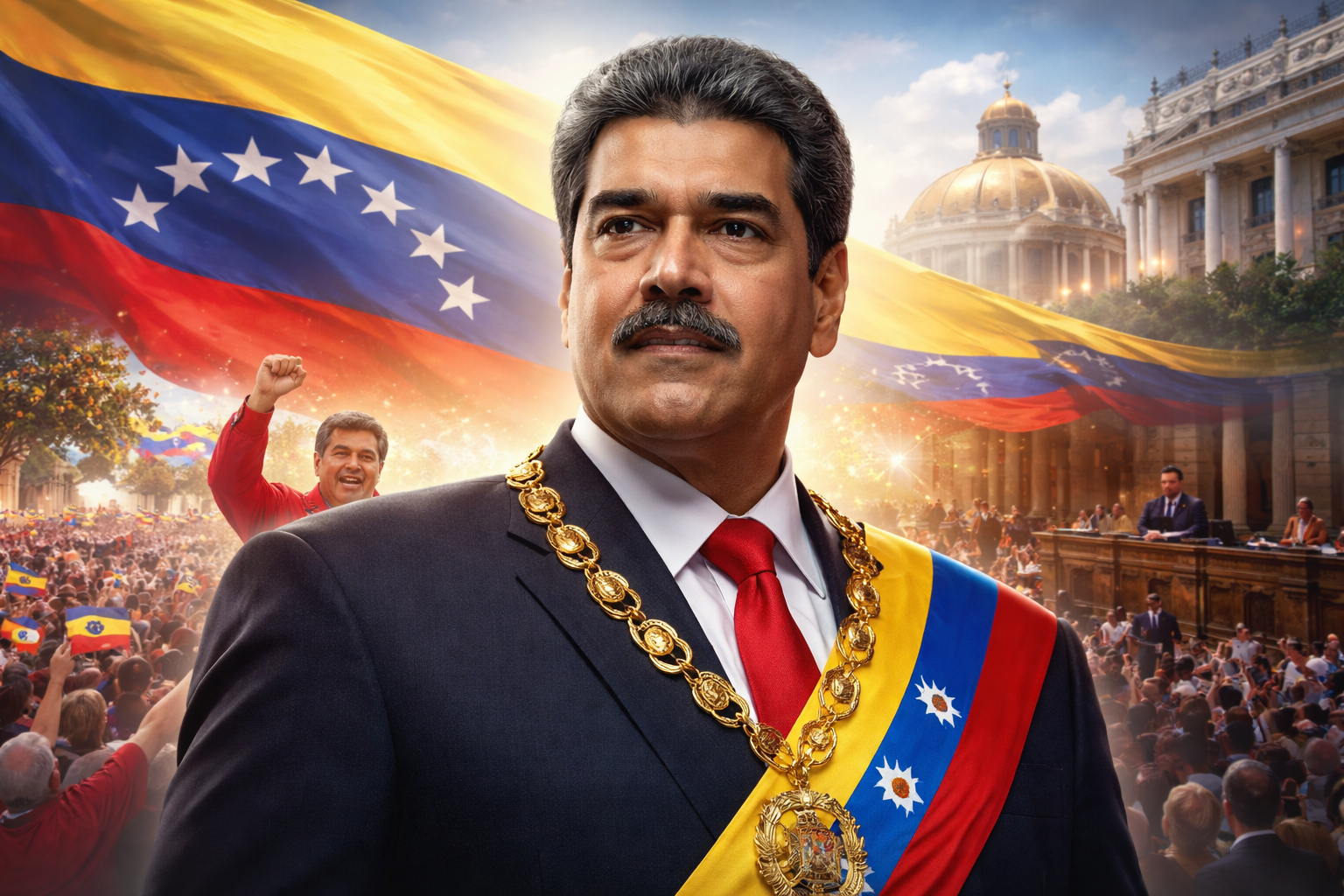
Nicolás Maduro is one of the most polarizing political figures in Latin America. As the president of Venezuela, his leadership has coincided with deep economic contraction, mass migration, and sustained international pressure. Supporters describe him as the guardian of Hugo Chávez’s socialist legacy critics portray him as an authoritarian ruler presiding over institutional decay. Understanding Nicolás Maduro’s life history and political journey is essential to understanding modern Venezuela.
Early Life and Family Background
Nicolás Maduro Moros was born on November 23, 1962, in Caracas, Venezuela. He grew up in a working-class family and was exposed early to leftist political ideas. His father was a union organizer, which shaped Maduro’s worldview and introduced him to labor politics at a young age. Maduro did not complete a traditional university education; instead, he pursued political activism through unions and grassroots movements.
His early years were marked by engagement with socialist ideology and admiration for revolutionary movements in Latin America. This formative period laid the foundation for his later alignment with Hugo Chávez and the Bolivarian Revolution.
ALSO READ – US Captures Maduro and Wife Post-Airstrike: Xi, Putin Furious
From Bus Driver to Union Activist
Before entering national politics, Maduro worked as a bus driver in Caracas. During this period, he became an active union leader, organizing transport workers and participating in strikes. This phase of his life is often highlighted by allies to emphasize his working-class roots.
Maduro’s union work also brought him into contact with radical leftist groups. He reportedly received political training in Cuba, where he studied organizational methods used by the Cuban government. These experiences strengthened his commitment to socialist governance and anti-imperialist rhetoric.
Entry Into Politics and Rise Under Hugo Chávez
Nicolás Maduro’s political career accelerated after Hugo Chávez rose to power in 1999. Maduro joined Chávez’s Fifth Republic Movement and was elected to Venezuela’s National Assembly in 2000. He quickly became a trusted loyalist, known more for discipline and ideological consistency than charisma.
In 2006, Chávez appointed Maduro as Minister of Foreign Affairs. He held this role for six years, becoming the longest-serving foreign minister in modern Venezuelan history. During this time, Maduro positioned Venezuela as a vocal critic of US foreign policy and strengthened alliances with Cuba, Russia, China, and Iran.
ALSO READ – Maduro’s Secret Chávez Pact: The Real Trigger for Trump’s Deadly Raid
Becoming Vice President and Chávez’s Chosen Successor
In 2012, Hugo Chávez appointed Maduro as Vice President of Venezuela. As Chávez’s health deteriorated due to cancer, Maduro increasingly acted as the public face of the government. Shortly before his death in March 2013, Chávez publicly endorsed Maduro as his preferred successor.
This endorsement proved decisive. Following Chávez’s death, Maduro ran in a special presidential election and narrowly defeated opposition candidate Henrique Capriles. The election result was disputed, but Maduro was sworn in as president, marking the beginning of a new phase in Venezuelan politics.
Presidency and Consolidation of Power
As president of Venezuela, Nicolás Maduro inherited a fragile economy heavily dependent on oil revenues. Falling global oil prices, combined with years of mismanagement, triggered hyperinflation, shortages of basic goods, and currency collapse.
Maduro responded by centralizing power. His government sidelined the opposition-controlled National Assembly in 2017 by creating a Constituent Assembly loyal to him. Elections under Maduro have been widely criticized by international observers for lacking transparency and fairness.
Despite domestic unrest and mass protests, Maduro retained the loyalty of key institutions, particularly the military. This support has been critical to his political survival.
International Relations and Sanctions
Nicolás Maduro’s presidency has been defined by confrontation with Western governments. The United States and several European and Latin American countries imposed sanctions on Venezuelan officials, citing human rights abuses and democratic backsliding.
In 2019, opposition leader Juan Guaidó declared himself interim president with US backing. Maduro rejected the move, accusing foreign powers of orchestrating a coup. Although Guaidó gained international recognition, he failed to dislodge Maduro, who maintained control over state institutions.
Maduro’s foreign policy continues to emphasize strategic partnerships with non-Western powers. These alliances have provided limited economic relief but reinforced Venezuela’s geopolitical isolation.
Leadership Style and Political Ideology
Nicolás Maduro’s leadership style is highly centralized and ideological. He frequently invokes Chávez’s legacy, presenting himself as the protector of the Bolivarian Revolution. His speeches often combine nationalist rhetoric with accusations of foreign sabotage.
Critics argue that Maduro governs through repression, censorship, and patronage networks. Supporters counter that he is defending Venezuela’s sovereignty under extreme external pressure. Regardless of perspective, Maduro’s rule represents continuity rather than reform.
Controversies and Human Rights Concerns
Maduro’s government has faced repeated allegations of human rights violations. International organizations have documented cases involving arbitrary detention, suppression of protests, and restrictions on media freedom. Maduro denies these claims, framing them as politically motivated attacks.
The humanitarian crisis has led millions of Venezuelans to migrate, reshaping regional demographics. This mass exodus has become one of the defining outcomes of Maduro’s presidency.
Nicolás Maduro’s Place in Venezuelan History
Nicolás Maduro’s political journey reflects both personal loyalty to Hugo Chávez and structural weaknesses in Venezuela’s political system. From union activist to president, his rise was enabled by Chávez’s charisma and institutional changes that concentrated executive power.
Whether history judges Maduro as a survivor under siege or as a leader who presided over national decline remains contested. What is clear is that his life and career are inseparable from the ongoing story of Venezuela’s political crisis.