|
Getting your Trinity Audio player ready... |
The success of a rideshare platform depends heavily on how intuitively users can interact with it during time sensitive situations. A thoughtfully designed interface reduces friction, increases trust, and supports consistent usage across diverse rider and driver groups. In the context of scalable digital mobility products, the white label Taxi App has become a common framework for rapid deployment. However, user experience design remains the defining factor that separates functional systems from truly effective ones. This article explores key UX considerations shaping modern rideshare platforms.
Understanding User Expectations in Modern Rideshare Interface Design
User expectations in rideshare applications are shaped by speed, reliability, and clarity. Riders expect to complete tasks such as booking, tracking, and payment within seconds, while drivers expect minimal distractions and actionable information. These expectations form the foundation for experience design decisions.
Key expectations commonly observed include:
- Immediate feedback on ride availability and pricing
- Clear visual confirmation of each completed action
- Predictable behavior across similar screens and workflows
In a white label Taxi App environment, these expectations must be met without extensive customization for every deployment. Designers must anticipate a broad audience with varying levels of technical comfort. This requires intuitive layouts, universally understood icons, and minimal cognitive load. By aligning interface behavior with mental models users already possess, platforms can reduce learning curves and improve overall satisfaction.
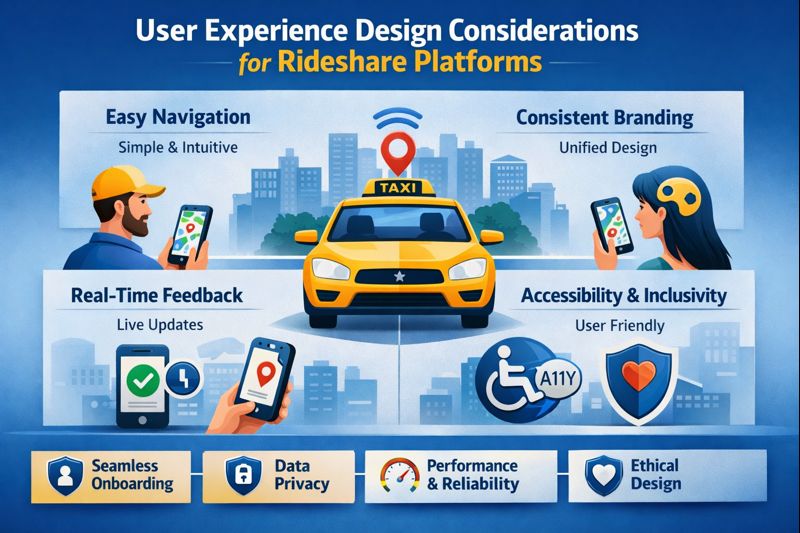
Navigation Simplicity and Information Hierarchy for Ride Booking
Navigation is central to usability in rideshare platforms. Users often interact with the application in dynamic environments, such as busy streets or moving vehicles, which limits attention and increases the risk of error. Simplified navigation structures help users achieve their goals quickly.
Effective navigation design relies on a clear information hierarchy. Primary actions such as booking a ride or accepting a request must be visually dominant, while secondary actions remain accessible but unobtrusive. Designers typically prioritize:
- Logical grouping of related features
- Progressive disclosure of advanced options
- Consistent placement of navigation elements
In ride booking flows, unnecessary steps should be eliminated. Each additional screen or confirmation increases the likelihood of abandonment. A well structured navigation system ensures that essential actions remain accessible without overwhelming the user, regardless of device size or context.
Visual Consistency and Branding Alignment Across Rideshare Screens
Visual consistency plays a critical role in establishing trust and usability. When colors, typography, and layout patterns remain consistent, users can focus on tasks rather than interface interpretation. Inconsistent visuals can create confusion and reduce perceived reliability.
Rideshare platforms often serve multiple stakeholders, including riders, drivers, and administrators. Maintaining consistency across these experiences reinforces a unified system identity. This is especially important when platforms are built using white label app solutions, where branding elements may vary between deployments.
Key principles supporting visual consistency include:
- Reusable design components and style guides
- Uniform iconography and color usage
- Predictable transitions and animations
Consistent visual language not only improves usability but also supports long term scalability. As features evolve, adherence to established design standards ensures that new screens integrate seamlessly into the existing experience.
Designing Seamless Onboarding and Authentication User Journeys
Onboarding is often the first interaction users have with a rideshare platform, making it a critical moment for engagement. A poorly designed onboarding flow can lead to early drop off, regardless of the platform’s underlying functionality.
Effective onboarding balances guidance with efficiency. Users should understand core features quickly without being overwhelmed by excessive instructions. Common best practices include:
- Step by step introductions with clear progress indicators
- Contextual tips that appear only when relevant
- Minimal data entry requirements during initial use
Authentication processes must also be carefully designed. While security is essential, excessive friction during login or verification can frustrate users. Streamlined authentication flows, combined with transparent explanations, help establish trust while maintaining compliance requirements. In a white label Taxi App, adaptable onboarding flows allow operators to meet regional or regulatory needs without compromising usability.
Real Time Feedback and Microinteractions That Build User Trust
Real time feedback reassures users that the system is responsive and functioning as expected. In rideshare platforms, where timing and location accuracy are crucial, feedback mechanisms significantly influence perceived reliability.
Microinteractions, such as subtle animations or status updates, guide users through complex processes. Examples include loading indicators during driver matching or visual confirmations when payments are processed. These elements may appear minor, but collectively they shape the overall experience.
Effective feedback design typically focuses on:
- Immediate acknowledgment of user actions
- Clear status updates during waiting periods
- Error messages that explain issues and suggest resolution
By providing continuous feedback, platforms reduce uncertainty and anxiety. This is particularly important in environments where delays or connectivity issues may occur. Thoughtful microinteractions help users feel informed and in control throughout their journey.
Accessibility and Inclusivity Considerations in Ride Hailing UX
Accessibility ensures that rideshare platforms are usable by individuals with diverse abilities and needs. Inclusive design is not limited to compliance requirements; it reflects a commitment to equitable user experiences.
Designers must consider factors such as visual impairments, motor limitations, and language diversity. Practical accessibility considerations include:
- Sufficient color contrast for readability
- Support for screen readers and assistive technologies
- Large touch targets for users with limited dexterity
Inclusivity also extends to cultural and linguistic adaptability. Clear language, recognizable symbols, and localization options improve usability across regions. By integrating accessibility principles from the outset, rideshare platforms can serve a broader audience while reducing the need for costly redesigns later.
Performance Optimization and Reliability in High Demand Scenarios
User experience is closely tied to performance, particularly during peak demand periods. Slow loading times or unresponsive interfaces can quickly erode trust, even if core functionality remains intact.
From a design perspective, performance optimization involves more than technical efficiency. Interfaces should be designed to gracefully handle delays and failures. This includes:
- Skeleton screens or placeholders during data loading
- Informative messages when services are temporarily unavailable
- Offline tolerant features where feasible
Understanding performance constraints is also essential during taxi app development, as design decisions directly influence system load and responsiveness. By anticipating high demand scenarios and designing accordingly, platforms can maintain a consistent experience even under stress.
Data Privacy Transparency and Ethical Design Responsibilities
Rideshare platforms handle sensitive personal data, including location information and payment details. User experience design plays a vital role in communicating how this data is collected, used, and protected.
Transparency builds trust when users understand why permissions are required and how their data benefits the service. Ethical design practices encourage informed consent rather than passive acceptance. Effective approaches include:
- Clear explanations presented at relevant moments
- Simple language avoiding technical jargon
- Easily accessible privacy controls and settings
Ethical considerations also extend to algorithmic transparency, such as fare calculations or driver assignment logic. While not all details can be disclosed, providing high level explanations helps users feel respected and informed. Awareness of the cost to build taxi app platforms should not outweigh the responsibility to design with integrity and accountability.
Conclusion
User experience design is a multidimensional discipline that shapes how rideshare platforms are perceived, trusted, and adopted. From navigation clarity and visual consistency to accessibility and ethical responsibility, each design decision contributes to the overall effectiveness of the system. By prioritizing user needs and contextual realities, designers can create experiences that remain reliable under pressure and adaptable over time. A disciplined, research driven approach to UX ensures that rideshare platforms continue to meet evolving expectations while maintaining clarity, inclusivity, and long term usability.