|
Getting your Trinity Audio player ready... |
In an unprecedented military operation, the United States captured Venezuelan President Nicolás Maduro and his wife Cilia Flores early Saturday morning following a series of airstrikes across Venezuela’s capital region. The dramatic raid, codenamed Operation Absolute Resolve, has triggered fierce international condemnation from China and Russia.
Operation Absolute Resolve: The Dramatic Raid
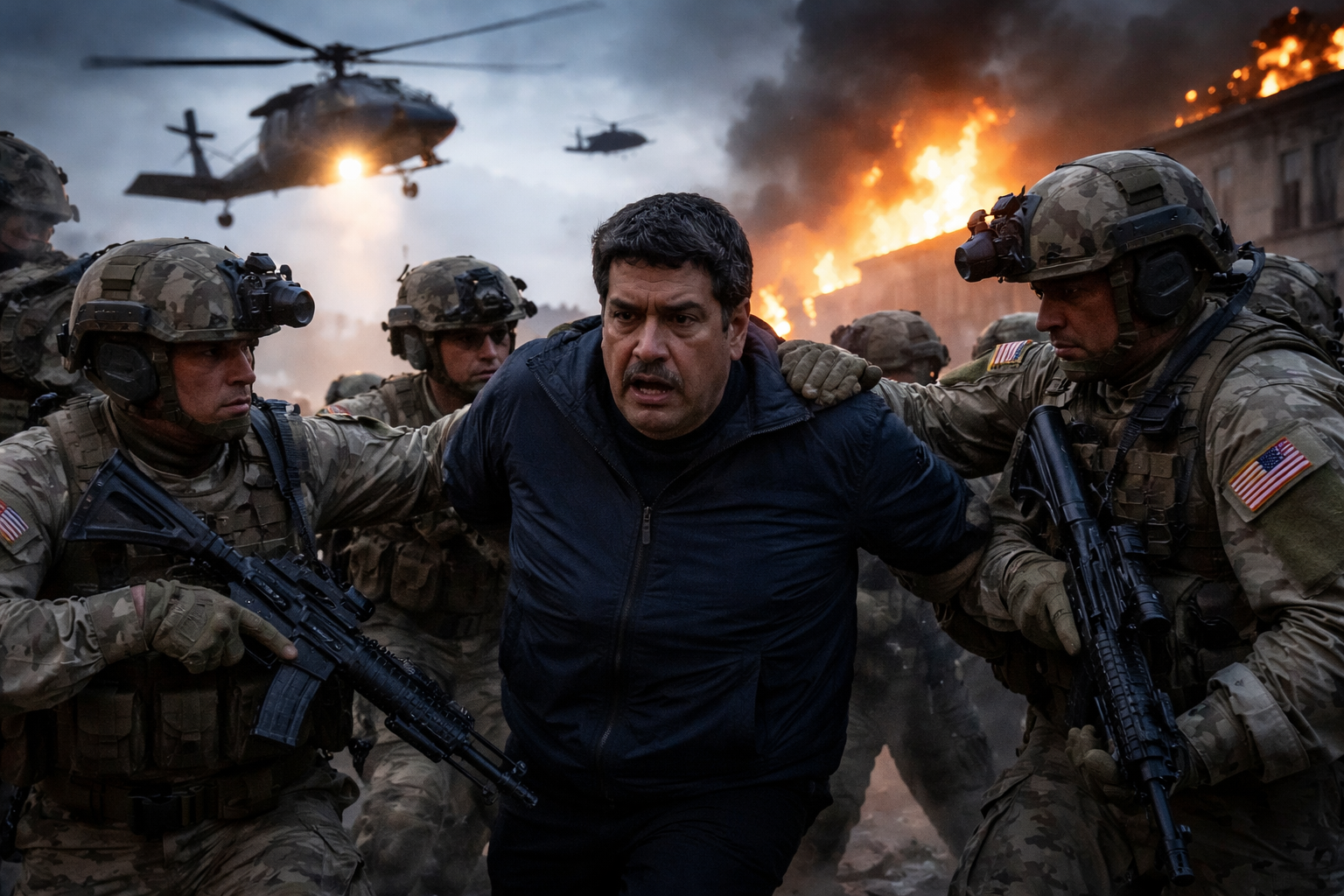
U.S. forces launched over 150 aircraft from bases across the Western Hemisphere in what became the largest American military operation in Latin America since the 1989 Panama invasion. The operation began around 2:00 a.m. local time when explosions rocked Caracas, targeting military installations including Fort Tiuna and Miranda Airbase.
Elite Delta Force operatives, assisted by an FBI unit, entered Venezuela at low altitude and raided Maduro’s compound around 1:00 a.m. ET. According to military officials, U.S. soldiers came under fire but successfully extracted both Maduro and Flores by approximately 3:29 a.m. ET without any American casualties.
President Trump announced the successful capture via Truth Social, stating the U.S. had carried out a large-scale strike against Venezuela and its leader. The Venezuelan president and first lady were transported to New York aboard the USS Iwo Jima and later transferred to the Metropolitan Detention Center in Brooklyn.
Legal Proceedings and Charges
Attorney General Pam Bondi announced that Maduro and Flores face charges including narco-terrorism conspiracy, cocaine importation conspiracy, and weapons violations in federal court. The new indictment alleges they ran state-sponsored gangs and facilitated drug trafficking operations flooding the United States with cocaine.
Maduro is expected to appear in Manhattan federal court next week at the same facility that has housed other high-profile defendants including Sean “Diddy” Combs and Sam Bankman-Fried.
Trump Administration’s Controversial Plans
In a startling announcement at his Mar-a-Lago residence, Trump declared that the United States would “run” Venezuela indefinitely until a proper transition of power occurs. The president suggested installing Maduro loyalist Delcy Rodríguez rather than opposition leader María Corina Machado, who won the 2025 Nobel Peace Prize and supported recognized election winner Edmundo González Urrutia.
This decision sparked confusion among Venezuelan opposition groups who had initially celebrated Maduro’s removal but now question whether meaningful change will occur.
Xi Jinping and Putin Express Fury
China strongly condemned the operation, with officials calling it “deeply shocking” and a serious violation of international law. Chinese authorities stated they “firmly oppose” what they termed “hegemonic acts” that threaten regional peace and security.
Russia’s Foreign Affairs Ministry expressed extreme concern, describing Maduro’s capture as a grave violation of sovereignty and international law. Moscow characterized the American action as armed aggression with untenable justifications.
Iran’s Supreme Leader Ayatollah Ali Khamenei also condemned the operation, urging resistance against what he called enemy arrogance and imposed actions.
Regional and Global Reactions
South American leaders expressed particular outrage. Brazilian President Luiz Inácio Lula da Silva condemned the operation as crossing an unacceptable line, warning it sets a dangerous precedent where might makes right. Colombian President Gustavo Petro rejected the aggression against Venezuelan sovereignty, emphasizing that internal conflicts should be resolved by the people themselves through peaceful means.
Mexico, Chile, Cuba, and Uruguay jointly opposed foreign military intervention, with Mexico’s Foreign Ministry condemning the unilateral action while reaffirming support for dialogue and negotiation.
Congressional Response and Legal Questions
Democratic lawmakers demanded immediate briefings and criticized the Trump administration for bypassing congressional authorization before the attack. Republican lawmakers largely supported the operation, with Representative Mario Díaz-Balart suggesting Cuba and Nicaragua’s governments face similar pressure.
Legal experts continue debating the constitutionality and international legality of the operation, particularly given the lack of congressional approval before military action.
What Comes Next
As Caracas residents survey destruction from the airstrikes, Venezuela faces an uncertain political future. The Venezuelan government requested an emergency UN Security Council meeting to address what it termed “imperialist aggression.”
With Maduro detained in New York awaiting trial and the Trump administration signaling long-term involvement in Venezuelan governance, the crisis represents a watershed moment in U.S.-Latin American relations that will reverberate across the hemisphere for years to come.