|
Getting your Trinity Audio player ready... |
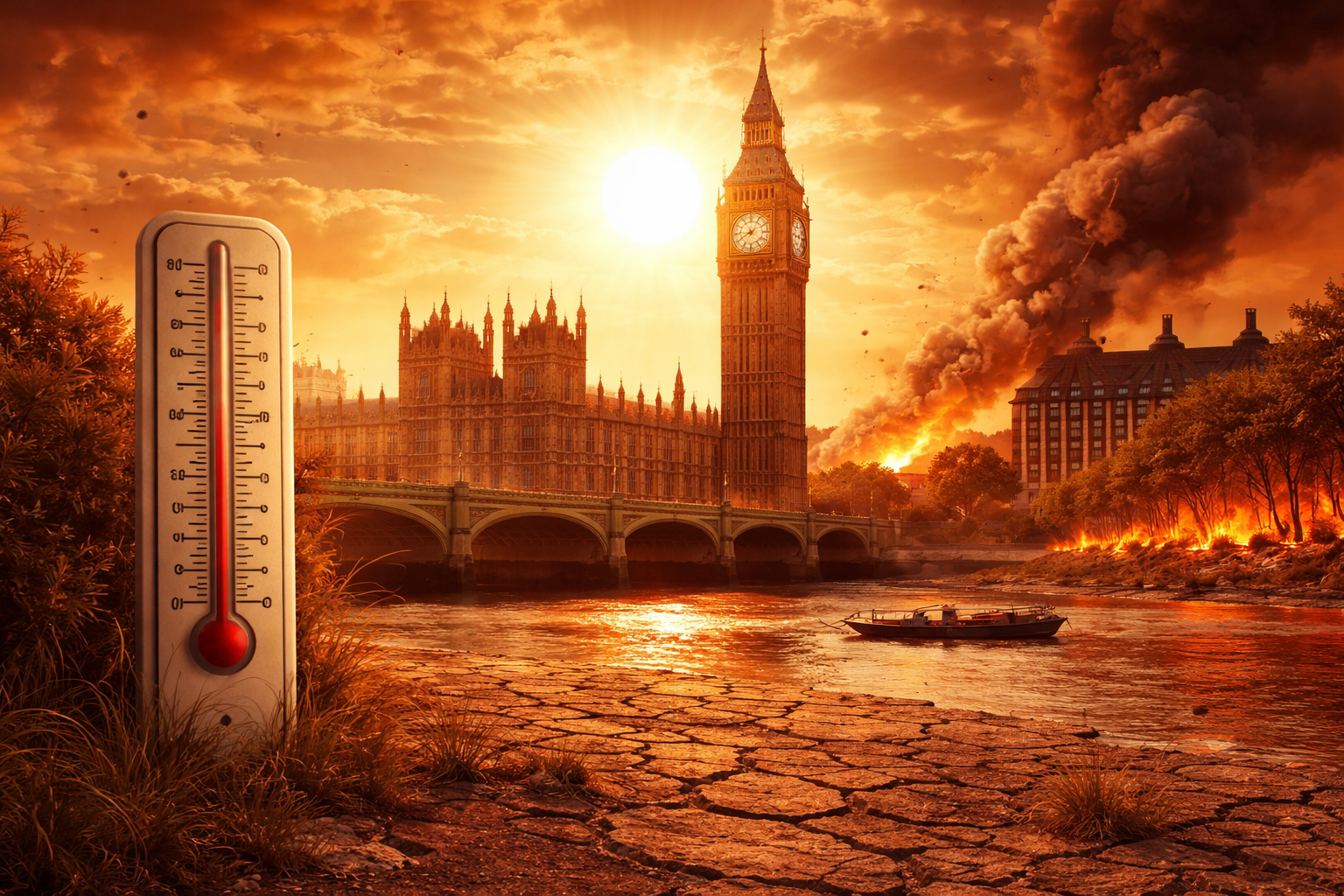
The United Kingdom officially recorded its hottest year ever in 2025, reinforcing scientific warnings about accelerating climate change. National meteorological data confirmed sustained temperature increases across all regions, accompanied by prolonged heatwaves, reduced frost days, and abnormal seasonal patterns. This milestone represents more than a statistical anomaly; it reflects a structural shift in the UK’s climate profile with global implications.
Key Climate Data Findings for 2025
Meteorological records indicate that average annual temperatures surpassed previous highs by a measurable margin. Summer months experienced repeated heat spikes, while winters remained unusually mild.
Key observations include:
- Record-breaking average temperatures across England, Scotland, Wales, and Northern Ireland
- Increased frequency of heatwaves exceeding historical thresholds
- Declining number of cold-weather days and overnight frosts
These trends align with long-term climate models projecting warming trajectories across Northern Europe.
Drivers Behind the Record Heat
Climate scientists attribute the UK’s record temperatures to a combination of global and regional factors.
Primary contributors include:
- Rising global greenhouse gas concentrations
- Persistent high-pressure systems trapping heat over Western Europe
- Warmer Atlantic sea surface temperatures influencing weather patterns
While natural climate variability plays a minor role, the dominant driver remains anthropogenic climate change driven by fossil fuel emissions and land-use changes.
Impact on Public Health and Infrastructure
The consequences of extreme heat in 2025 extended beyond discomfort; they created systemic stress on public health and infrastructure.
Observed impacts included:
- Increased heat-related illnesses and mortality among vulnerable populations
- Strain on healthcare systems during prolonged heat events
- Transport disruptions caused by rail track expansion and road surface damage
Urban heat island effects amplified risks in major cities such as London, Birmingham, and Manchester.
Environmental and Economic Consequences
Record temperatures accelerated environmental degradation across ecosystems.
Notable effects:
- Reduced water levels in rivers and reservoirs
- Agricultural yield volatility due to heat stress and irregular rainfall
- Increased wildfire risk in rural and semi-urban areas
Economically, sectors such as agriculture, energy, and insurance faced rising costs linked to climate volatility.
How the UK Is Responding
The UK government and local authorities expanded climate adaptation strategies throughout 2025. Measures focused on resilience rather than mitigation alone.
Key initiatives included:
- Heat-resilient urban planning policies
- Investment in early warning systems for extreme weather
- Energy grid upgrades to manage peak cooling demand
However, experts argue that adaptation without accelerated emission reductions will remain insufficient over the long term.
Global Context and Climate Accountability
The UK’s record year mirrors similar trends across Europe and other parts of the world. 2025 ranked among the warmest years globally, reinforcing the interconnected nature of climate systems.
International pressure is mounting for:
- Stronger emissions reduction commitments
- Faster transition to renewable energy
- Climate finance support for vulnerable nations
Failure to act decisively increases the probability of irreversible climate thresholds.
What This Means for the Future
The data from 2025 signals that extreme heat is no longer an exception but an emerging baseline. Climate projections indicate that without substantial intervention, record-breaking years will become routine rather than rare.
Critical priorities for 2026 include:
- Scaling national decarbonization efforts
- Integrating climate risk into economic planning
- Strengthening public awareness and preparedness
The UK recording its hottest year ever in 2025 is a definitive indicator of accelerating climate change. The evidence is no longer abstract or distant; it is measurable, local, and disruptive. Whether this moment becomes a catalyst for systemic action or another missed warning will define the country’s climate trajectory for decades to come.