|
Getting your Trinity Audio player ready... |
Introduction
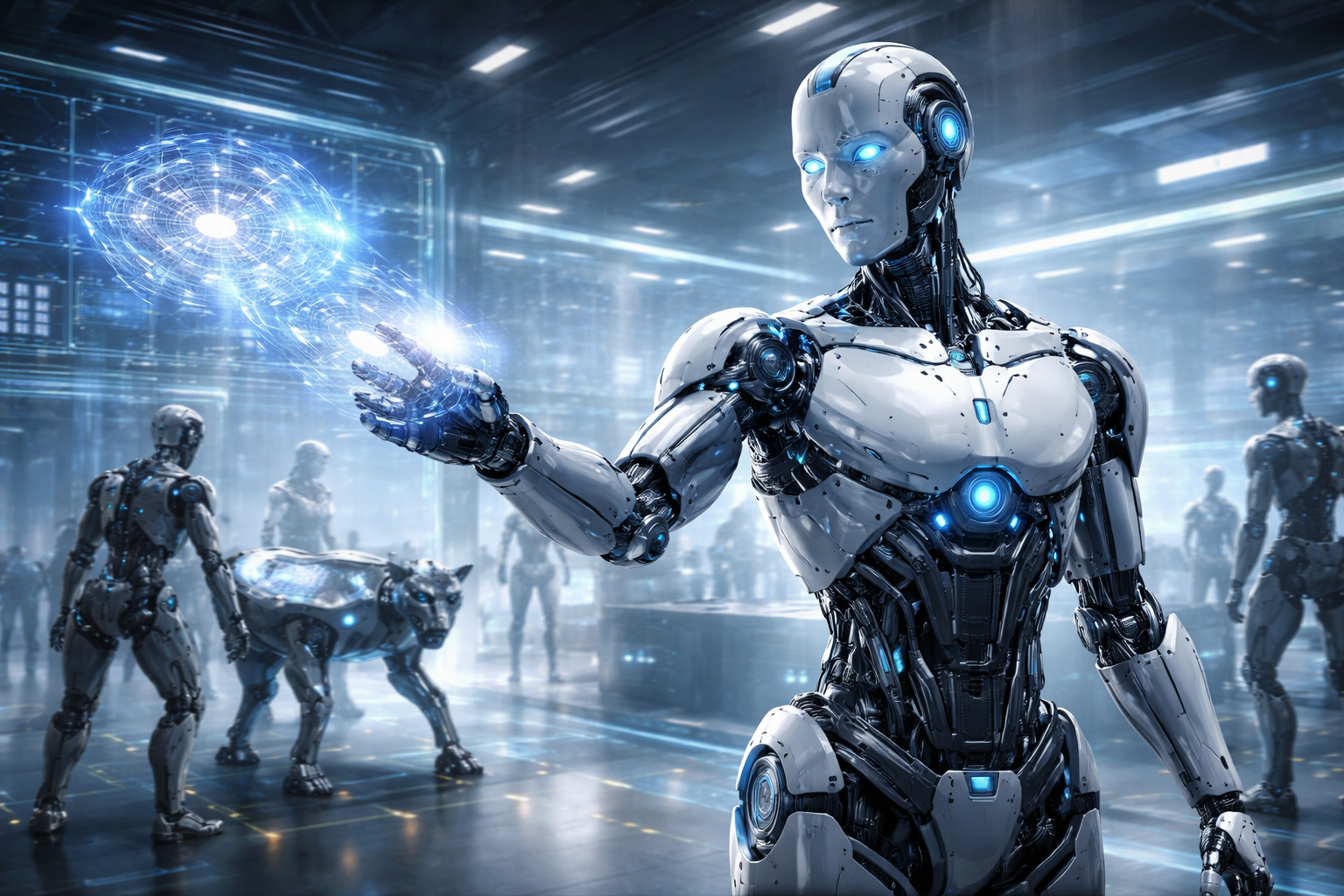
The convergence of robotics and artificial intelligence is entering a decisive phase in 2026. No longer limited to factory automation or scripted tasks, today’s AI robots are powered by advanced machine learning, real-time perception, and adaptive decision-making. These “digital minds in physical bodies” are transforming how industries operate, how services are delivered, and how humans interact with intelligent machines. From humanoid robots to fully autonomous robots, the next leap in AI-driven robotics is reshaping the future of work and society.
The Evolution of AI Robots
Early robots followed predefined rules and repetitive motions. In contrast, modern AI-powered systems learn continuously from data, environments, and interactions.
Key advancements driving this evolution include:
- Deep learning models enabling visual, speech, and behavioral recognition
- Edge AI allowing robots to process data locally with low latency
- Reinforcement learning for real-time decision optimization
This shift has moved robots from “tools” to intelligent collaborators capable of adapting to dynamic environments.
Humanoid Robots: Bridging Human–Robot Interaction
Humanoid robots represent one of the most visible breakthroughs in 2026. Designed to resemble human form and behavior, they are optimized for human robot interaction.
Use cases gaining traction:
- Front-desk assistants in healthcare and hospitality
- Elderly care companions supporting daily activities
- Training and simulation roles in education and defense
Their human-like gestures, speech recognition, and emotional response modeling help reduce friction and improve trust between humans and machines.
Industrial Robots Get Smarter and Safer
Industrial robots have long been the backbone of manufacturing, but AI is redefining their capabilities.
Modern AI-driven industrial robots now offer:
- Predictive maintenance using sensor data
- Vision-based quality inspection
- Collaborative robotics (cobots) working safely alongside humans
With AI automation, factories are becoming more agile, reducing downtime while improving precision and scalability.
Service Robots Transform Customer Experiences
The rise of service robots is one of the fastest-growing trends in 2026. These robots operate in public-facing environments where adaptability and interaction are critical.
Common applications include:
- Autonomous delivery robots in urban areas
- Cleaning and sanitation robots in airports and hospitals
- Customer support robots in retail and banking
By combining natural language processing with contextual learning, service robots enhance efficiency without compromising user experience.
Autonomous Robots and Decision Intelligence
Autonomous robots represent the pinnacle of AI-enabled independence. These systems can navigate, plan, and act with minimal human intervention.
Core capabilities include:
- Real-time environment mapping
- Self-navigation and obstacle avoidance
- Adaptive mission planning
Industries such as logistics, agriculture, defense, and mining are rapidly adopting autonomous robotics to reduce risk and operational costs.
The Role of Machine Learning in Robotics
At the core of this transformation is machine learning. It allows robots to move beyond pre-programmed behavior and continuously improve performance.
Machine learning enables:
- Pattern recognition from large sensor datasets
- Behavior optimization through reinforcement learning
- Personalized responses in human interactions
As models become more efficient, robots are learning faster while consuming less computational power.
Challenges and Ethical Considerations
Despite rapid progress, AI-driven robotics presents challenges that organizations must address:
- Workforce displacement and reskilling needs
- Data privacy and surveillance concerns
- Safety, accountability, and regulatory compliance
Balancing innovation with ethical deployment will be critical as robots become more autonomous and human-like.
Conclusion
In 2026, the fusion of physical robots and digital intelligence marks a defining moment for AI robots. From smart factories and autonomous logistics to human-centric service and humanoid robotics, AI is unlocking unprecedented capabilities. Organizations that strategically adopt intelligent robotics while addressing ethical and operational challenges will gain a significant competitive advantage. The future is no longer about machines that follow instructions, but about intelligent systems that learn, adapt, and collaborate with humans.