|
Getting your Trinity Audio player ready... |
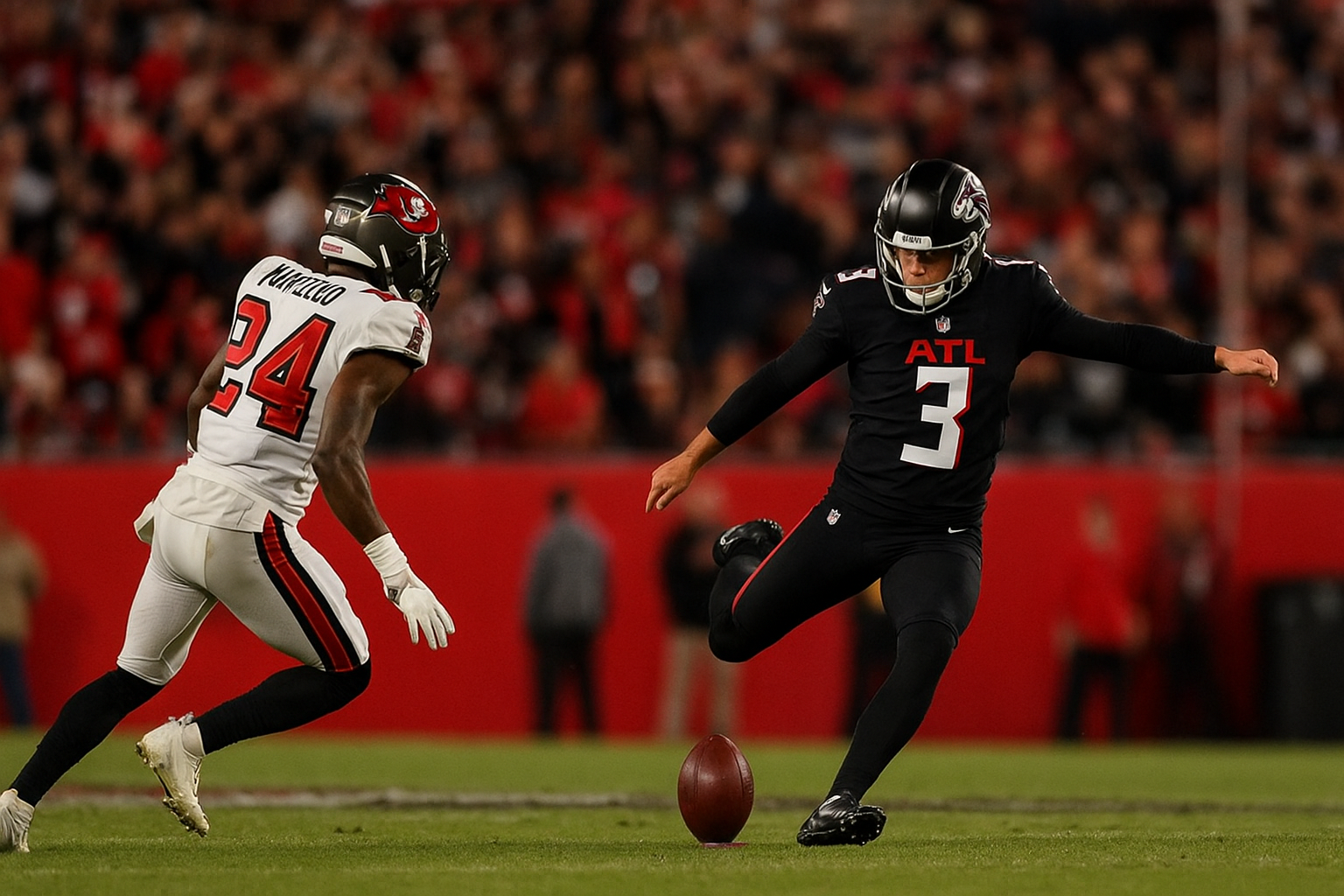
The Atlanta Falcons delivered a precise and disciplined performance at Raymond James Stadium, defeating the Tampa Bay Buccaneers 29:28 with a walk off field goal that reshaped the NFC South conversation. The Thursday Night Football clash carried playoff significance; both franchises entered the contest with narrow margins for error as the division race intensified.
Atlanta opened with a balanced script that relied on controlled tempo; strong runs on early downs created structure for intermediate passing routes. This allowed the Falcons to sustain possession across long drives and keep Tampa Bay’s defense on the field. Despite periodic pressure from the Buccaneers front seven, Atlanta’s offensive line maintained consistency and protected its rhythm.
Tampa Bay countered through Baker Mayfield’s aggressive approach. Mayfield produced several high leverage throws into tight windows; his vertical attempts forced the Falcons secondary to adjust its spacing. Although Tampa Bay generated strong yardage totals, the Buccaneers struggled to convert in short field situations during the first half. These missed opportunities shaped the final margin.
The second half developed into a tactical exchange. Atlanta leaned into play action on early downs; this created separation for receivers against zone coverage and led to multiple scoring drives. The Falcons’ run game controlled the interior gaps and limited Tampa Bay’s ability to rotate fresh personnel. This sustained control of possession became a central factor in the closing minutes.
Mayfield’s late drive provided the Buccaneers with a brief surge. His composure under pressure and precise reads across the middle produced a touchdown that gave Tampa Bay a 28:26 lead. However, the Falcons retained enough time to construct a final response. Their two minute drill was executed with clear situational awareness; short completions and sideline stops positioned the ball within field goal range without risking turnovers.
The decisive kick was executed cleanly; the final seconds expired as the ball sailed through the uprights. Atlanta’s sideline reacted with controlled intensity, aware that the victory tightened the NFC South race and improved the outlook of the Falcons schedule.
From a statistical standpoint, Mayfield delivered competitive numbers; his passing accuracy under pressure remained notable. However, Atlanta limited explosive plays and forced Tampa Bay to rely on extended drives. The Falcons avoided major errors, minimized penalties and maintained strategic discipline across all phases. Their defensive containment of Tampa Bay’s run game prevented balance in the Buccaneers’ offensive structure.
The result carries clear significance for the division. The NFC South standings remain fluid; this win gives Atlanta an essential intra division tiebreaker. Tampa Bay now faces increased urgency as it approaches the remaining games on the Buccaneers schedule. Analysts evaluating sports prediction models will note the shift in playoff probability caused by this narrow loss.
The matchup also influenced national attention surrounding Thursday Night Football; fans searching for information on who plays football tonight, what time the game begins and which teams headline TNF received a contest that matched its pre game expectations. The high tension finish and single point margin demonstrated how slim the separation between these rivals remains.
Upcoming forecasts for both teams will depend on injury evaluations, short week preparation cycles and remaining conference opponents. For Atlanta, the victory strengthens internal morale and stabilizes its trajectory. For Tampa Bay, the focus will turn toward recalibrating defensive assignments and enhancing red zone efficiency.
The Falcons exit the night with a critical 29:28 win; the Buccaneers leave with frustration but remain mathematically viable. As NFL Week 15 continues, the implications of this contest will influence prediction models, fan debates and future primetime narratives.