|
Getting your Trinity Audio player ready... |
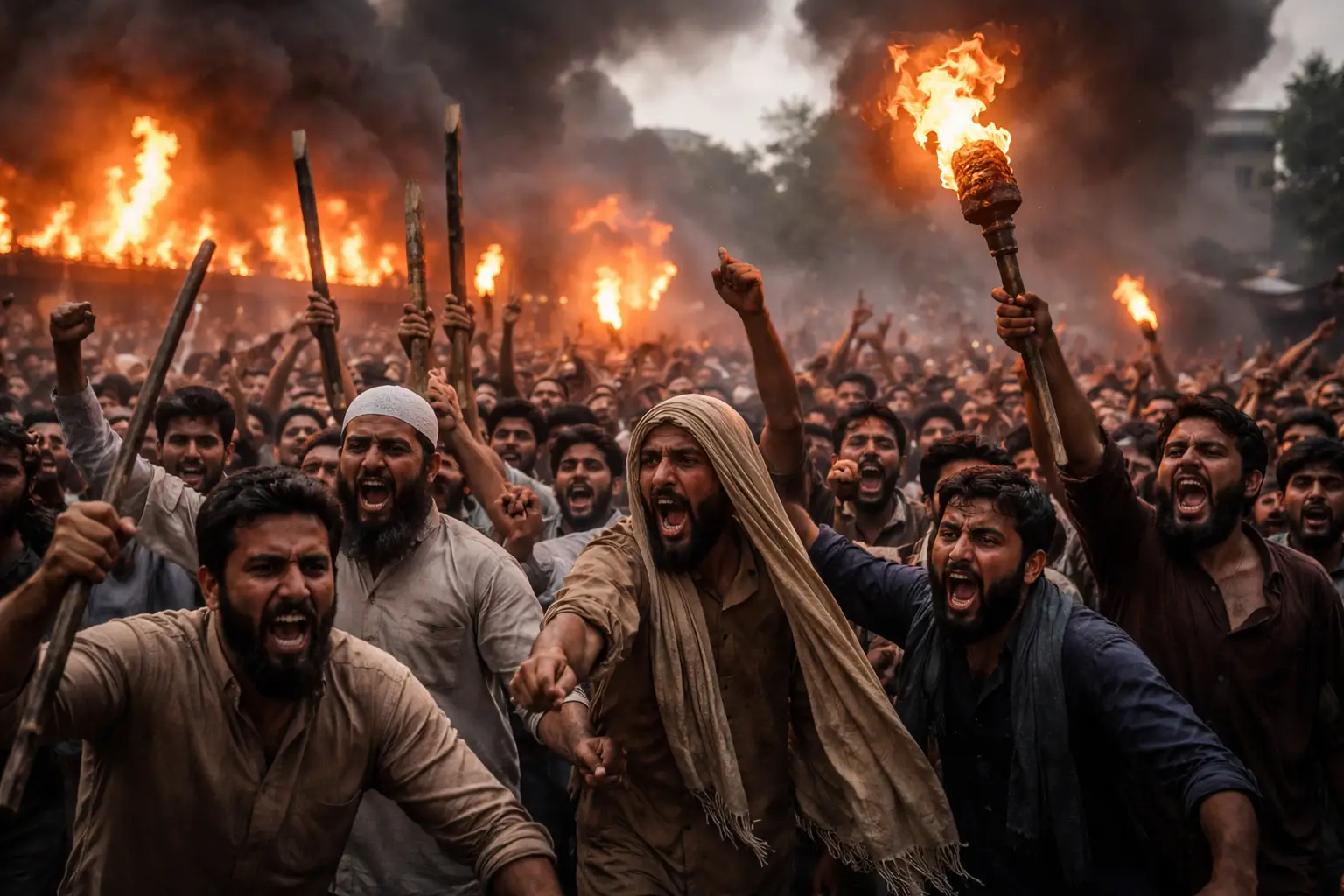
Arguments often used by those who justify “Mob Justice”
Note: These are common justifications used by crowds during such unrest, though they are legally and ethically indefensible in a modern state.
- Defense of Sacred Values: Proponents of this view argue that certain religious figures and beliefs are so sacred that any insult to them is a direct attack on the soul of the community. They believe that immediate action is necessary to “protect the honor” of their faith.
- Lack of Faith in the Legal System: A common argument is that the formal judiciary is slow, corrupt, or “too soft” on blasphemy. Mob participants often claim that if they hand a suspect over to the police, the person might eventually be released due to a lack of evidence or political intervention.
- Deterrence through Fear: Some argue that extreme, public punishments like the public lynching of Dipu Chandra Das serve as a permanent deterrent, ensuring no one else dares to “disrespect” religious sentiments in the future.
The Negative: Why this incident is an Absolute Violation of Justice
This side represents the stance of the Interim Government, Human Rights organizations, and the Global Community.
- Violation of Fundamental Human Rights: The right to life is absolute. No allegation, regardless of how offensive, justifies the extrajudicial killing of a human being. Burning a person alive is a crime against humanity that no “sentiment” can excuse.
- The Danger of False Accusations: As seen in the case of Dipu Chandra Das, initial investigations by the Rapid Action Battalion (RAB) suggest there was no evidence of blasphemy. The allegation was reportedly a fabrication by a co-worker to settle a personal grudge. Mob justice leaves no room for trial, evidence, or truth.
- Destruction of State Sovereignty: When a mob takes the law into its own hands, it declares that the State and its laws are irrelevant. This leads to anarchy. If every group decided to kill those they disagreed with, society would collapse into endless tribal warfare.
- Targeting of Vulnerable Minorities: Historically, blasphemy allegations are frequently “weaponized” against religious minorities (like Hindus in Bangladesh) to seize property, settle debts, or exert communal dominance. This is not about religion; it is about persecution.
Comparison: Mob Action vs. Rule of Law
| Feature | Mob “Justice” (The Incident) | The Rule of Law (Right Path) |
| Foundation | Emotion and Rumor | Evidence and Fact |
| Process | Immediate Violence | Fair Trial & Defense |
| Outcome | Death of an Innocent | Just Punishment if Guilty |
| Social Impact | Fear and Division | Order and Harmony |
Conclusion: Is it Right or Wrong?
From a legal, ethical, and humanitarian standpoint, the incident is unequivocally wrong.
- Thematically: It represents the failure of a society to protect its most vulnerable.
- Spiritually: Most religious scholars in Bangladesh have issued fatwas (rulings) stating that the murder of non-Muslims and minorities is forbidden.
- Legally: It is a capital crime. The interim government’s arrest of factory managers and participants proves that “mob justice” is viewed as a threat to the nation’s future.