|
Getting your Trinity Audio player ready... |
The Queensland Supreme Court has delivered a decisive ruling that marks a critical moment in Australia’s environmental activism landscape. The court directed Adani to withdraw its six hundred million dollar damages claim and a proposed five-year injunction against Australian activist Ben Pennings. The outcome has been widely described by Australian media as a massive victory for public advocacy and civil resistance.
Also Read – Stock Market Forecast 2025: Is Wall Street Headed for Growth or a Sudden Correction?
Ben Pennings has been a visible figure in campaigns opposing the Carmichael coal mine. His legal confrontation with Adani centered on allegations that his activism caused substantial financial harm to the company. The scale of the claim signaled a broader concern among civil society groups about potential legal intimidation strategies used against environmental activists.
The court’s decision to order the complete withdrawal of the damages claim effectively nullifies the central argument presented by Adani. This outcome reinforces the legal protection afforded to public interest activism within democratic systems. It also sets a notable precedent: companies pursuing large-scale resource projects may face stricter judicial scrutiny when attempting to restrain activist activities through expansive litigation.
Also Read – Bitcoin Inflation: Why Easing Inflation Could Send BTC Soaring
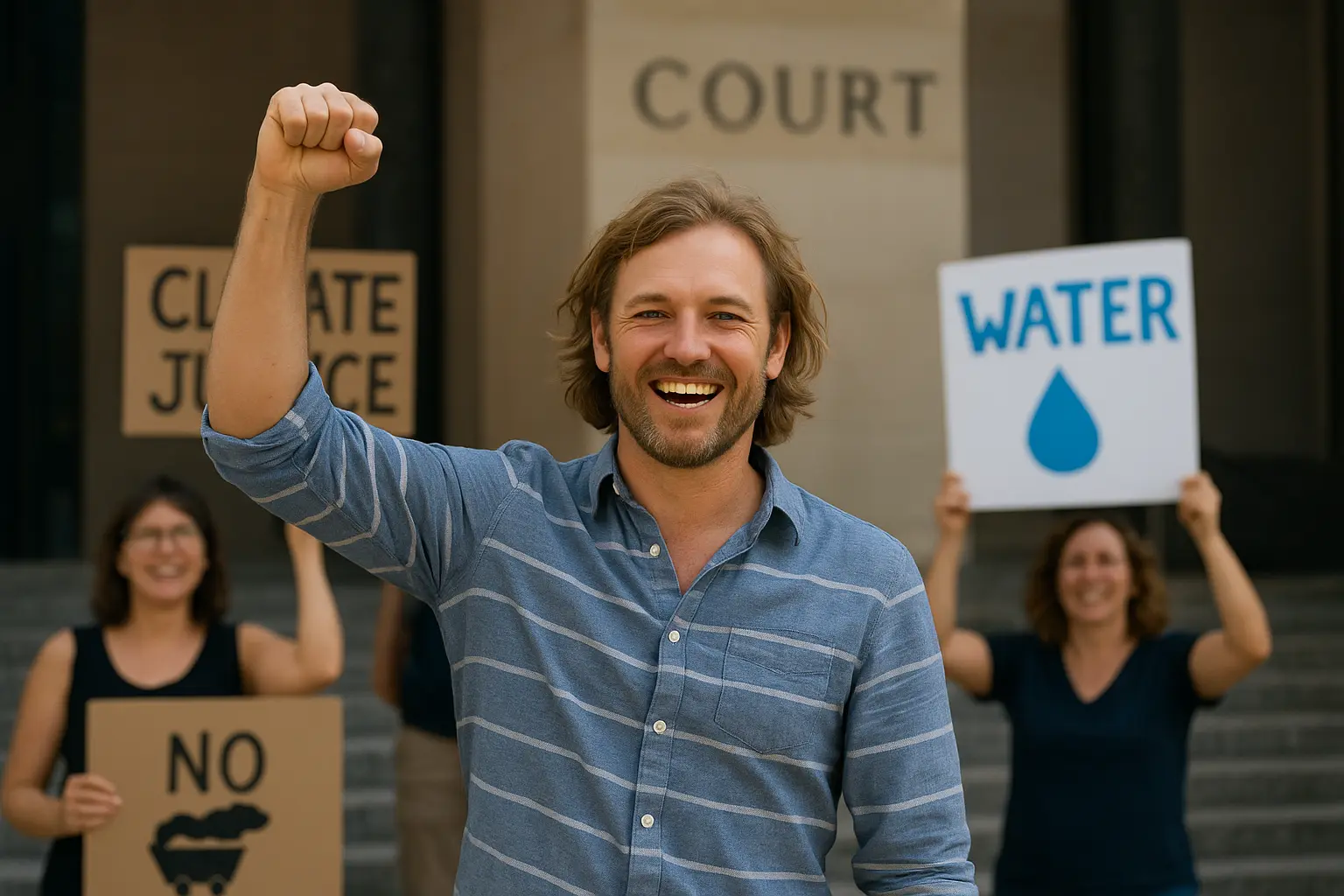
Pennings was seen celebrating the verdict alongside supporters. Their presence outside the courthouse highlighted the community’s sustained opposition to the Carmichael project. Protest materials held by attendees reflected long-standing environmental concerns related to emissions, water usage, and the impact of coal extraction on regional ecosystems.
The ruling further rejected Adani’s request for long-term injunctions that would have restricted Pennings’s advocacy. Removing the five-year injunction request signals a judicial acknowledgment of the importance of freedom of expression and the right to participate in public debate, particularly on matters connected to climate policy and resource development.
This decision will likely influence future engagements between environmental groups and corporate entities. Legal experts note that the judgment limits the scope of claims that corporations may pursue against activists unless substantial material proof of damages is demonstrated. The case also brings renewed attention to Australia’s climate politics at a time when global scrutiny of fossil fuel projects continues to intensify.
Also Read – RSF Accepts Humanitarian Cease-Fire Proposal as Sudan Conflict Enters New Phase
Public response to the ruling has been strong. Advocacy organizations have issued statements describing the verdict as a restoration of balance between civil activism and corporate litigation. Supporters argue that the resolution strengthens democratic accountability while reaffirming the legitimacy of peaceful protest.
The Carmichael coal mine remains one of the most debated resource projects in the country. Government bodies, Indigenous groups, environmental organizations, and local communities have been engaged in an extended discourse about the mine’s long-term viability and its broader environmental footprint. The Supreme Court’s verdict adds a new dimension to this debate by clarifying the boundaries of legal pressures that can be directed at activists who challenge resource operations.
Ben Pennings has indicated that the outcome reinforces his commitment to environmental advocacy. Observers note that the decision may energize broader movements focused on climate policy reform and sustainable development strategies throughout Australia.
Also Read – Trump’s Own Actions May Have Pushed India and Russia Closer to China
With the damages claim dismissed and the injunction withdrawn, the ruling stands as a judicial affirmation of the rights of individuals to question and oppose large corporate initiatives. Analysts expect the decision to influence both activism strategies and corporate legal approaches in future environmental disputes.
The case will be studied by legal scholars, policymakers, and advocacy organizations due to its implications for civil liberties, climate activism, and corporate accountability. It signals that courts remain a significant safeguard against disproportionate legal measures targeting public advocates. As debates surrounding the Carmichael project continue, the ruling constitutes a pivotal moment in the intersection of law, environmental activism, and resource development in Australia.