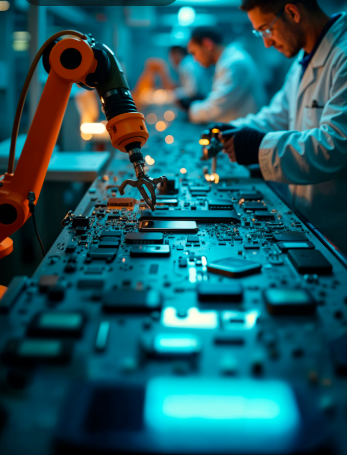
The United States is experiencing a historic acceleration in AI infrastructure development as major cities transform into powerful hubs for semiconductor manufacturing and cloud innovation. Fueled by aggressive investments from technology giants, federal incentives, and a surging global demand for compute power, America is entering a new era of digital industrial growth. Cities that once relied on traditional industries are now becoming the epicenter of next-generation chip fabrication, hyperscale data centers, AI research, and cloud network expansion.
A New Race for AI Dominance Across U.S. Cities
From Phoenix to Austin and Columbus to Atlanta, urban regions are fiercely competing to attract the companies driving the future of AI. The semiconductor workforce is rapidly expanding, advanced data centers are breaking ground at record speed, and engineering talent is flowing into these emerging tech corridors. The momentum signals a shift toward a geographically distributed technology landscape that reduces dependency on foreign supply chains and strengthens national AI independence.
Semiconductor Manufacturing Becomes a National Priority
The semiconductor industry is the backbone of AI computing. With chip shortages still impacting global supply chains, the U.S. government and private sector are collaborating to accelerate domestic production. Companies like TSMC, Intel, Micron, and GlobalFoundries are executing massive multi-billion-dollar fabrication projects that redefine the economic profile of their host cities.
Phoenix has become a magnet for chip fabrication facilities, transforming the region into one of the largest semiconductor ecosystems in the world. Ohio is seeing a manufacturing revival as new mega-fab projects bring thousands of engineering and technical jobs. Meanwhile, Texas continues to strengthen its position with advanced chip facilities and innovation clusters attracting top tier AI researchers.
The long term impact is clear. Semiconductor manufacturing is no longer concentrated in Asia. America is building its own powerful, resilient semiconductor base to support the next wave of AI infrastructure growth.
Cloud Providers Scale Up to Support AI Growth
Major cloud hyperscalers including Amazon Web Services, Microsoft Azure, and Google Cloud are investing heavily in new data center regions across the U.S. These facilities support AI model training, enterprise workloads, and high performance computing at a scale never seen before.
Northern Virginia continues to dominate as the world’s largest data center hub. Chicago, Dallas, Portland, Atlanta, and Salt Lake City are quickly rising as strategic alternatives for cloud expansion. The demand for compute, storage, and GPU clusters has increased so dramatically that cloud providers are racing to build facilities that can support the exponential growth in AI workloads.
Cities offering reliable power grids, incentives, water resources, and strong fiber connectivity are becoming the preferred destinations for cloud infrastructure investments. As AI becomes the core of digital transformation, these regions will play a pivotal role in powering global enterprises.
AI Talent Migration Transforms Regional Economies
The rise of the AI infrastructure boom is reshaping workforce dynamics. Engineering graduates, data scientists, chip specialists, and cloud architects are relocating to the cities where this new generation of technology is taking root. As a result, emerging tech hubs are experiencing rapid economic uplift. Housing markets, retail sectors, and local businesses are benefiting directly from the influx of high-skilled professionals.
Universities are forming partnerships with semiconductor and cloud companies to upskill talent and expand research programs. This collaboration creates a long term foundation for innovation and ensures that the AI revolution remains anchored on U.S. soil.
Why This Trend Matters for the Future of AI
AI systems rely on three critical elements. High performance chips. Scalable cloud networks. And skilled talent. The rapid transformation of U.S. cities into AI infrastructure hubs signals a powerful shift toward national technological leadership.
The U.S. is no longer just a consumer of global hardware and cloud services. It is rapidly becoming the production engine, research center, and operational core for the next wave of AI growth. This shift positions America as a strategic leader in the world’s most important technological race.