|
Getting your Trinity Audio player ready... |
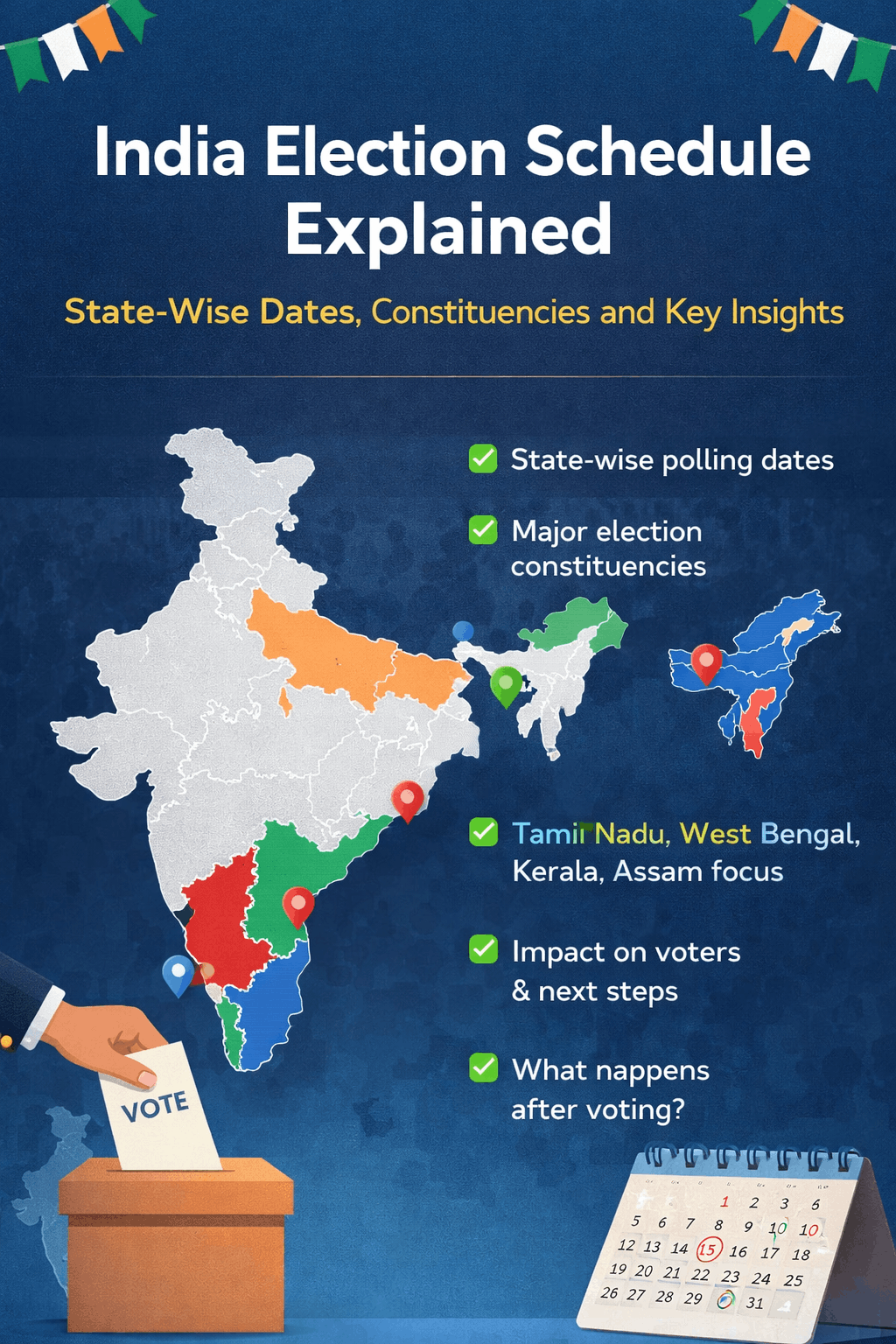
The India election schedule plays a crucial role in shaping the country’s democratic process. Every election cycle brings attention to voting dates, election constituencies, and state-wise developments that directly impact voters, political parties, and governance. Understanding the election schedule is not just important for political observers but also for citizens who want to participate responsibly in the electoral process.
This article explains the latest election schedule in India, focusing on major states, constituencies, and why these elections matter at both regional and national levels.
Understanding the India Election Schedule
The election schedule in India outlines key details such as:
- Polling dates
- Phases of voting
- Counting day
- State-wise election timelines
Due to the country’s size and population, elections are conducted in multiple phases to ensure smooth administration, security, and voter convenience. Each phase covers different states or constituencies, depending on logistical and security considerations.
The India election schedule is designed to maintain transparency and fairness while allowing voters adequate time to prepare for polling day.
Why Election Constituencies Matter
Election constituencies form the backbone of India’s electoral system. Each constituency represents a defined geographic area from which voters elect their representatives. The number of constituencies and their boundaries significantly influence election outcomes.
Key reasons why constituencies are important:
- They ensure equal voter representation
- They reflect population distribution
- They determine candidate eligibility and campaign strategies
Understanding election constituencies helps voters make informed decisions and better evaluate candidates contesting from their region
Tamil Nadu Election: What to Know
The Tamil Nadu election often attracts national attention due to the state’s strong regional political dynamics. Elections here are closely watched because of high voter turnout and issue-based campaigning.
Key aspects of the Tamil Nadu election include:
- A large number of urban and rural constituencies
- High public engagement in voting
- Regional issues influencing electoral choices
The election schedule ensures adequate time for campaigning and voter awareness across constituencies, allowing democratic participation at scale.
West Bengal Election and Regional Impact
The West Bengal election holds strategic importance in eastern India. The state’s diverse electorate and closely contested constituencies make elections highly competitive.
Important factors in the West Bengal election:
- Multiple voting phases due to population density
- Focus on constituency-level issues
- Strong voter participation across districts
The election schedule is structured to manage security concerns and ensure fair voting across all constituencies.
Kerala Election: A Unique Electoral Landscape
The Kerala election stands out due to high literacy rates and informed voter participation. Political awareness in the state results in closely contested elections with a focus on governance, development, and social policies.
Key highlights of the Kerala election:
- Issue-driven campaigns
- Strong constituency-level debates
- High voter turnout
The election schedule allows sufficient time for candidates to reach voters and present their agendas clearly.
Assam Election and Electoral Diversity
The Assam election represents the political diversity of the northeastern region. The state has varied demographics, making constituency management and election scheduling especially important.
Key elements of the Assam election:
- Multi-phase voting due to geography
- Focus on regional and local issues
- Balanced representation across constituencies
The election schedule helps address logistical challenges while ensuring voter accessibility.
Bengal Election: Constituency-Wise Importance
The Bengal election highlights how constituency-level dynamics shape overall outcomes. Urban, semi-urban, and rural constituencies each bring different priorities to the electoral process.
Understanding the Bengal election requires attention to:
- Constituency demographics
- Local development issues
- Voter sentiment across regions
The election schedule ensures fair coverage of all areas and equal opportunity for participation.
How the Election Schedule Affects Voters
The India election schedule directly impacts voters by:
- Informing them of polling dates
- Allowing time for voter education
- Ensuring orderly voting processes
When voters are aware of the schedule, they can plan participation more effectively and avoid missing important voting phases.
What Happens After Voting?
Once voting concludes across all phases:
- Votes are securely stored
- Counting takes place on a designated day
- Results are declared constituency-wise
This structured approach ensures transparency and builds trust in the electoral process.
Why Understanding the Election Schedule Is Important
Knowing the election schedule empowers citizens to:
- Participate actively in democracy
- Understand political developments
- Evaluate candidates and constituencies