|
Getting your Trinity Audio player ready... |
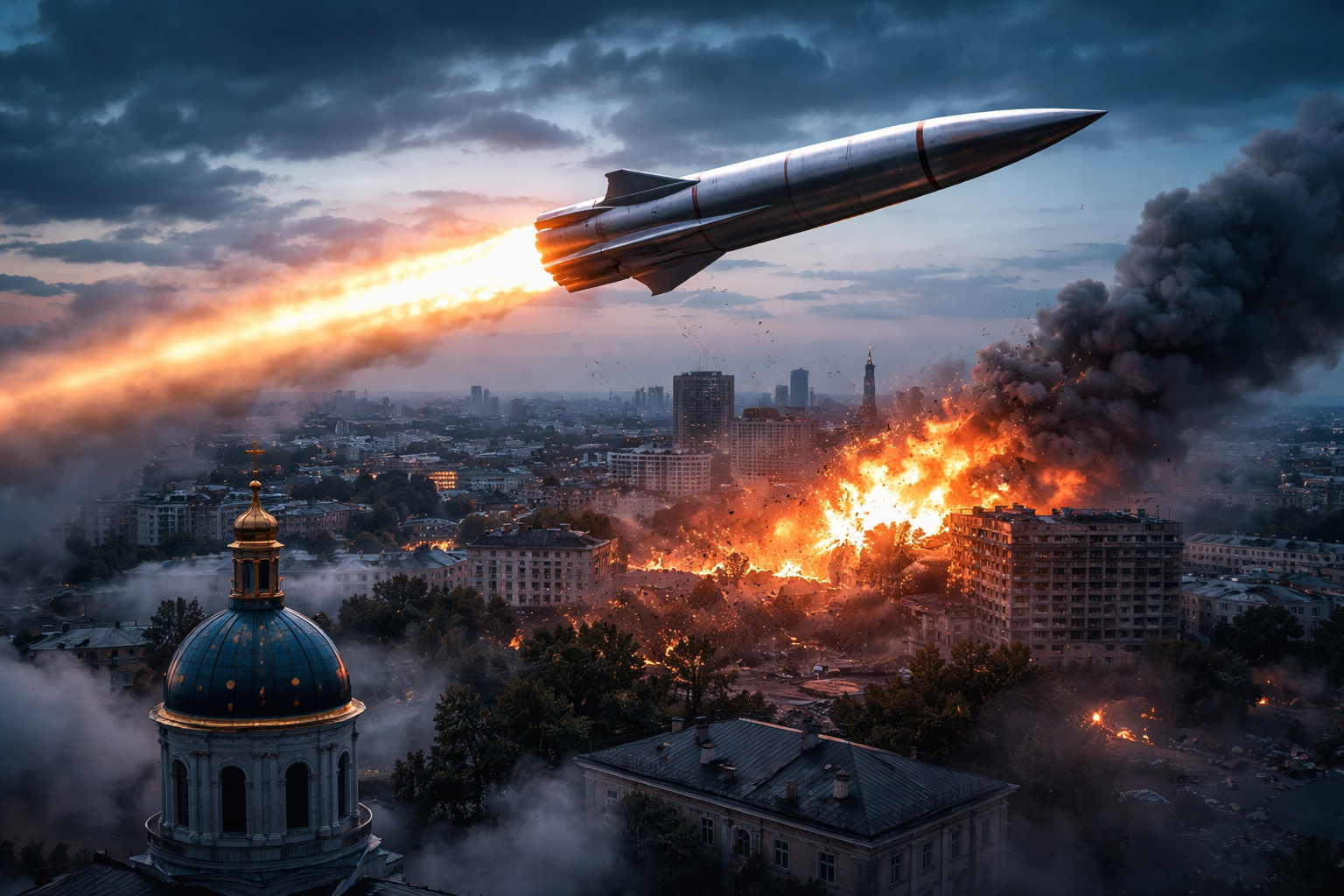
Russia has fired a hypersonic Oreshnik missile at Ukrainian targets in what Moscow claims was retaliation for an alleged Ukrainian drone strike on President Vladimir Putin’s residence. The attack marks a dangerous escalation in the ongoing conflict, though Ukrainian officials have dismissed Russia’s justification as “absurd” propaganda.
The Oreshnik missile system, which Russia first deployed in late 2024, represents one of Moscow’s most advanced weapons platforms. Capable of traveling at speeds exceeding Mach 10, hypersonic missiles pose significant challenges for existing air defense systems due to their speed and maneuverability.
Russian defense officials claimed the strike targeted Ukrainian military command infrastructure in response to what they characterized as a “terrorist attack” on Putin’s official residence. State media broadcast dramatic footage allegedly showing debris from intercepted drones near Kremlin properties, though independent verification of the claims remains impossible.
Ukraine’s Defense Ministry strongly denied conducting any such operation. “Russia’s claims are completely fabricated and serve only to justify their continued aggression,” spokesperson Natalia Humeniuk stated. “This is a familiar pattern where Moscow invents provocations to rationalize attacks they were planning regardless.”
Western intelligence agencies have expressed skepticism about Russian allegations, noting Moscow’s history of false flag operations and manufactured justifications for military actions. No independent evidence has emerged confirming any Ukrainian strike on Putin’s residence.
The Oreshnik missile strike caused significant damage to civilian infrastructure in the targeted Ukrainian city, killing at least twelve people and injuring dozens more. Residential buildings near the stated military targets sustained heavy damage, continuing the pattern of Russian attacks affecting civilian populations.
International condemnation of the strike has been swift. United Nations Secretary-General António Guterres called for immediate de-escalation, while NATO members denounced the attack as a disproportionate use of force. The United States announced additional military aid packages for Ukraine in response.
The deployment of hypersonic weapons represents a troubling escalation in the conflict’s lethality. These advanced systems are extremely expensive and typically reserved for high-value targets, suggesting either genuine Russian anger over alleged provocations or a deliberate demonstration of military capability intended to intimidate Ukraine and its supporters.
Military analysts note that Russia’s hypersonic missile inventory remains limited, making their use in conventional strikes strategically questionable. The decision to expend such advanced weaponry may indicate either genuine concern about Ukrainian capabilities or political pressure on military leadership to demonstrate strength.
The incident occurs amid broader international efforts to facilitate negotiations between Russia and Ukraine. However, such attacks significantly complicate diplomatic initiatives by hardening positions on both sides and reducing trust in potential ceasefire arrangements.
Ukrainian President Volodymyr Zelenskyy used the attack to renew calls for enhanced air defense systems capable of intercepting hypersonic threats. Western allies have provided substantial military assistance but have been cautious about supplying the most advanced systems due to escalation concerns.
As the conflict approaches its third anniversary with no resolution in sight, incidents like the Oreshnik strike demonstrate the continued risk of further escalation and the suffering of Ukrainian civilians caught in the crossfire.