|
Getting your Trinity Audio player ready... |
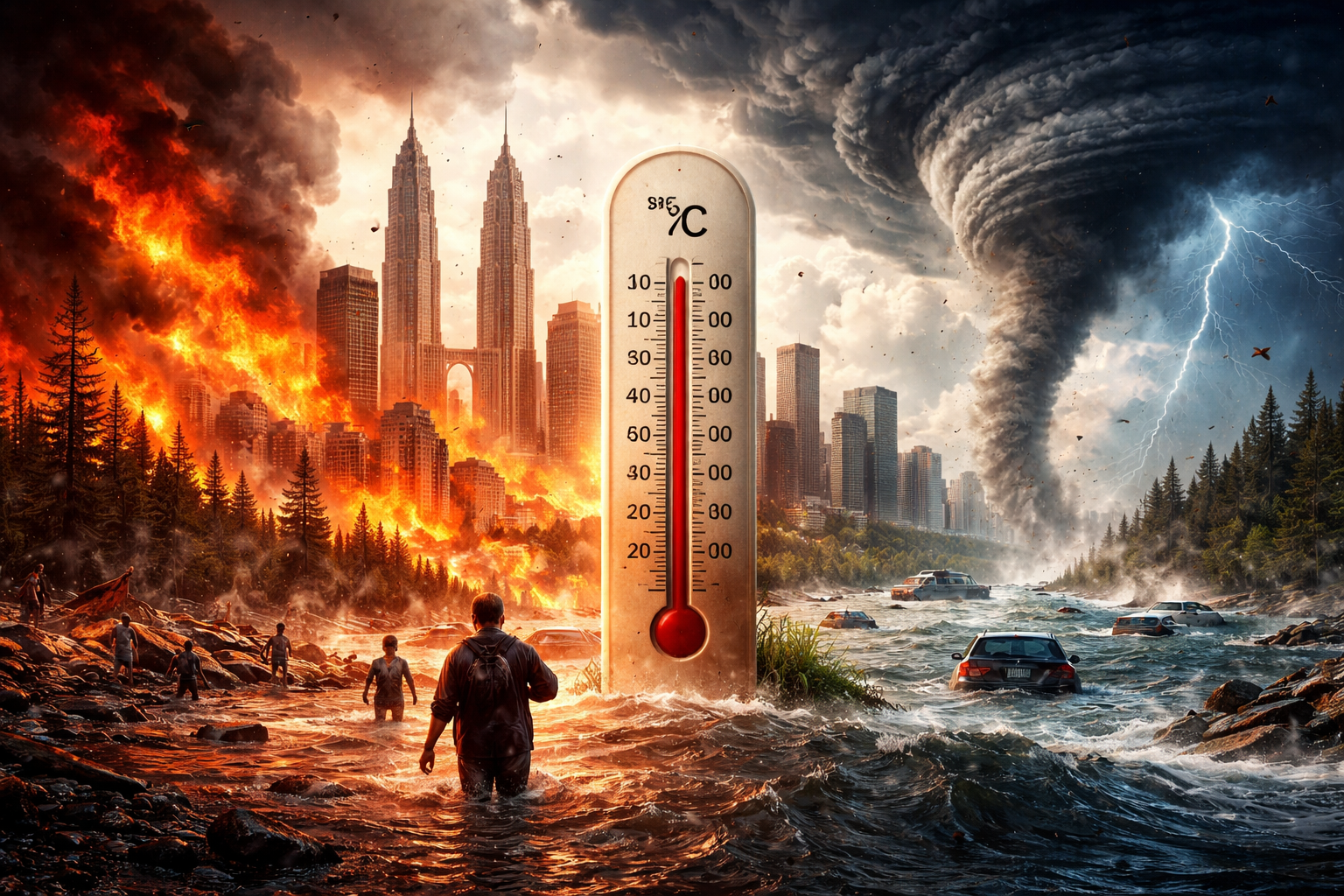
The first weeks of 2026 have delivered a stark reminder of accelerating climate change, as unprecedented heat waves, devastating storms, and prolonged droughts impact communities across every continent. Scientists report that global temperature anomalies are tracking significantly above projections, with economic damages from climate-related disasters already exceeding $150 billion in early January alone.
Southern Asia experienced its hottest January on record, with temperatures in parts of India and Pakistan surpassing 35°C—nearly 12 degrees above historical averages. The extreme heat triggered widespread power outages as electricity demand for cooling overwhelmed grid capacity. Agricultural losses mounted as crops withered in fields, threatening food security for hundreds of millions of people. Public health systems struggled to cope with heat-related illnesses, with emergency rooms reporting record admissions for dehydration and heat stroke.
Meanwhile, North America faced a different climate extreme. Atmospheric rivers dumped record rainfall across California, Oregon, and Washington, causing catastrophic flooding in urban centers and agricultural regions. Insurance companies estimate flood damages exceeding $40 billion, with thousands of homes destroyed and critical infrastructure severely damaged. The paradox of extreme precipitation following years of severe drought highlights the increasing volatility of weather patterns under climate change.
Europe is grappling with unseasonably warm winter temperatures that have disrupted ecosystems and winter sports economies. Alpine regions report snow depths 60% below normal, devastating ski resorts and threatening summer water supplies that depend on snowmelt. Climate scientists emphasize that these warm anomalies are consistent with accelerated Arctic warming, which disrupts jet stream patterns and weather stability across the Northern Hemisphere.
The economic implications extend far beyond immediate disaster costs. Supply chain disruptions from extreme weather are driving inflation in food, energy, and manufactured goods. Major corporations are revising growth projections downward as climate risks impact operations, logistics, and consumer demand. Credit rating agencies have begun incorporating climate vulnerability into sovereign debt assessments, with several nations facing potential downgrades due to inadequate adaptation measures.
International climate negotiations have taken on renewed urgency. Developing nations are demanding that wealthy countries fulfill long-standing commitments to climate finance, arguing that they face disproportionate impacts despite contributing minimally to historical emissions. The debate over loss and damage compensation intensified following devastating cyclones in the Pacific Islands and East Africa, where entire communities have been displaced.
Renewable energy adoption is accelerating as governments recognize that mitigation efforts must intensify. Solar and wind installations are setting records, with global renewable capacity additions expected to exceed 500 gigawatts in 2026. However, experts warn that current efforts remain insufficient to limit warming to 1.5°C above pre-industrial levels, the target established by the Paris Agreement.
Climate scientists stress that the extreme weather events of early 2026 represent not anomalies but the emerging normal. Without dramatic reductions in greenhouse gas emissions and substantial investments in adaptation infrastructure, the frequency and severity of climate disasters will continue escalating, with profound implications for global stability, economic prosperity, and human wellbeing.