|
Getting your Trinity Audio player ready... |
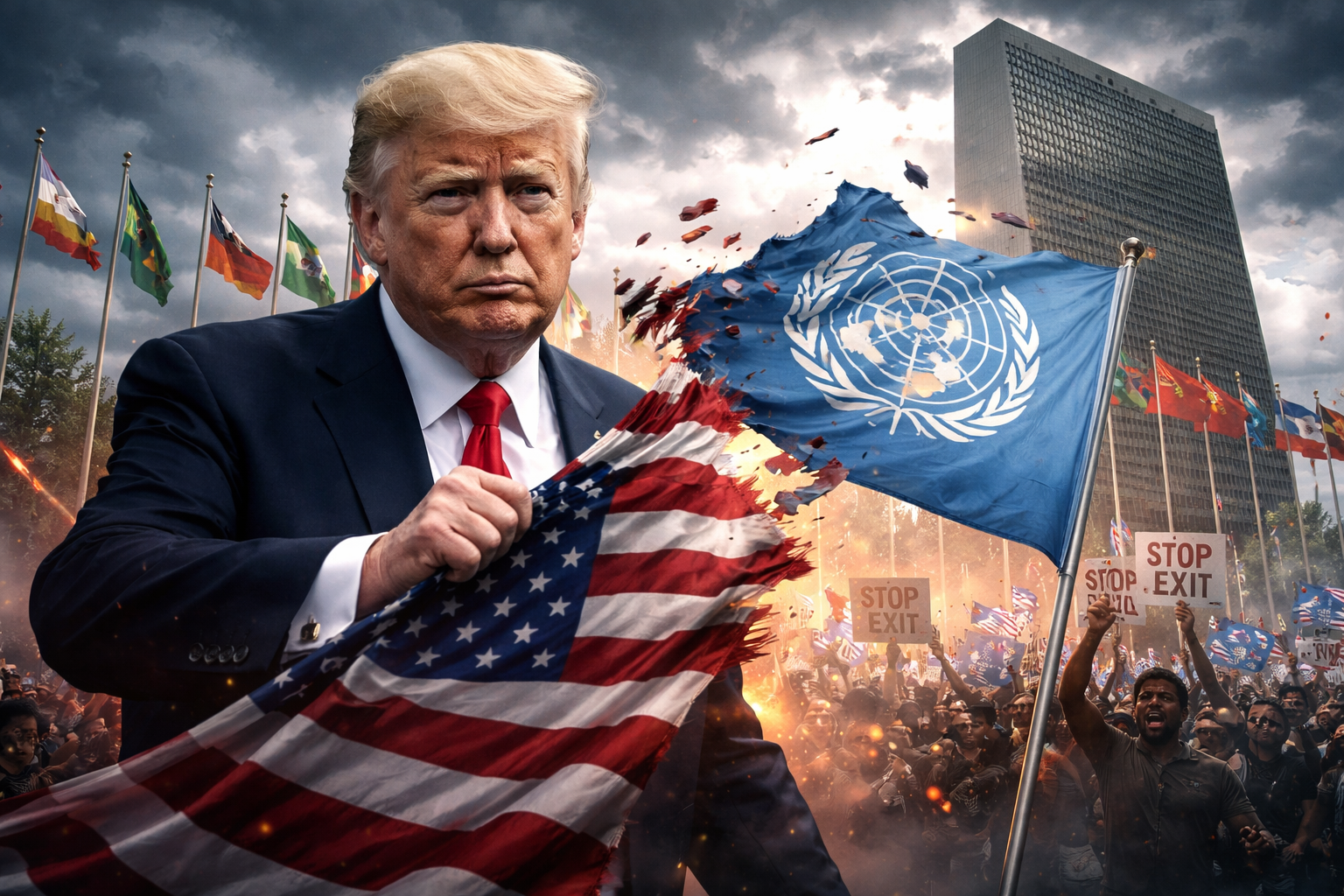
President Donald Trump’s bold decision to withdraw the United States from dozens of United Nations and international organizations marks a seismic shift in U.S. foreign policy, igniting fierce worldwide backlash as of January 8, 2026. Targeting bodies focused on climate change, peacekeeping, human rights, and democracy promotion, the move fulfills long-standing Trump administration goals to reduce American commitments abroad and prioritize “America First” principles. Critics warn this UN withdrawal Trump strategy could isolate the U.S. on the global stage, while supporters hail it as a necessary break from costly multilateral entanglements.
Why Trump Targets These UN Organizations Now
The withdrawals span over 30 entities, including key UN climate panels like the IPCC working groups, peacekeeping oversight committees, and democracy-focused arms such as the UN Democracy Fund. Trump’s plan to pull the U.S. out of dozens of UN and global bodies stems from frustrations over perceived biases, funding burdens, and policies clashing with U.S. interests, like aggressive climate mandates and sanctions on allies. Administration officials argue these groups have failed to deliver results, citing billions in U.S. contributions with little return. This aligns with Trump’s reelection promises to slash international spending and refocus on domestic priorities.
Global Backlash and Domestic Divide
World leaders reacted swiftly, with European Union diplomats decrying the move as a “retreat from shared global responsibilities” and China positioning itself to fill the leadership vacuum. UN Secretary-General António Guterres called it a “dangerous precedent” that undermines collective action on existential threats. Domestically, Democrats in Congress vowed legal challenges, labeling it reckless, while GOP hardliners praised Trump’s decisiveness. Protests erupted in major U.S. cities, blending anti-Trump sentiment with fears over climate policy voids.
Impacts on Climate, Peace, and U.S. Economy
On climate, the U.S. exit from UN bodies hits hardest: Trump’s plan severs ties with frameworks pushing net-zero goals, potentially derailing Paris Agreement offshoots despite America’s prior re-entry. Peacekeeping efforts face funding gaps, as U.S. pullback from oversight roles could slow missions in conflict zones like Ukraine and the Middle East. Economically, supporters point to savings estimated at $2-3 billion annually redirectable to border security and infrastructure. However, businesses warn of trade ripple effects from diminished U.S. influence in global standards.
What’s Next for Trump’s US Exits UN Era
Congress has 90 days to review major withdrawals, but Trump’s veto power and the Republican House majority make overrides unlikely. Legal battles loom in federal courts over treaty obligations. Internationally, allies like the UK and Japan scramble to mitigate fallout, while rivals exploit the shift. For Americans, this United States Quits International Peace Bodies Under Trump, the saga signals a redefined global footprint that is less multilateral and more unilateral.
Stay tuned for updates on Trump international organizations’ exits, as this story dominates 2026 headlines. Share your thoughts: Does Trump’s UN withdrawal strengthen or weaken America?