|
Getting your Trinity Audio player ready... |
Background: A Pact That Shaped Power in Caracas
For more than a decade, Nicolás Maduro has presented himself as the natural heir to Hugo Chávez. Behind the public narrative, intelligence briefings and defectors’ accounts have long alleged the existence of a hidden succession pact. This Chávez–Maduro agreement, reportedly sealed during Chávez’s final months, outlined emergency powers, control over military promotions, and safeguards for loyalists tied to state oil revenues. The pact’s purpose was continuity; its consequence was the hardening of a closed regime.
The Chávez–Maduro Hidden Agreement: What Was at Stake
Sources familiar with regional intelligence describe the pact as a contingency blueprint. It prioritized regime survival over constitutional process, authorized rapid consolidation of security forces, and embedded parallel command channels within the armed forces. Such mechanisms would explain how Maduro neutralized rivals after Chávez’s death and maintained cohesion despite economic collapse. For Washington, the document reframed Maduro not as a temporary caretaker but as the executor of a long-term authoritarian design.
Why the Pact Alarmed Washington
US policymakers viewed the alleged agreement as a trigger point. It suggested permanence, not volatility. That distinction mattered during the Trump administration, which favored decisive pressure to disrupt entrenched networks. Analysts argue that the pact’s emphasis on shadow governance, coupled with sanctions evasion and regional security spillovers, elevated Maduro from a diplomatic problem to a strategic threat. The phrase “Venezuela regime change pact” entered internal memos as shorthand for the risks.
Trump’s Calculus: From Pressure to Raid
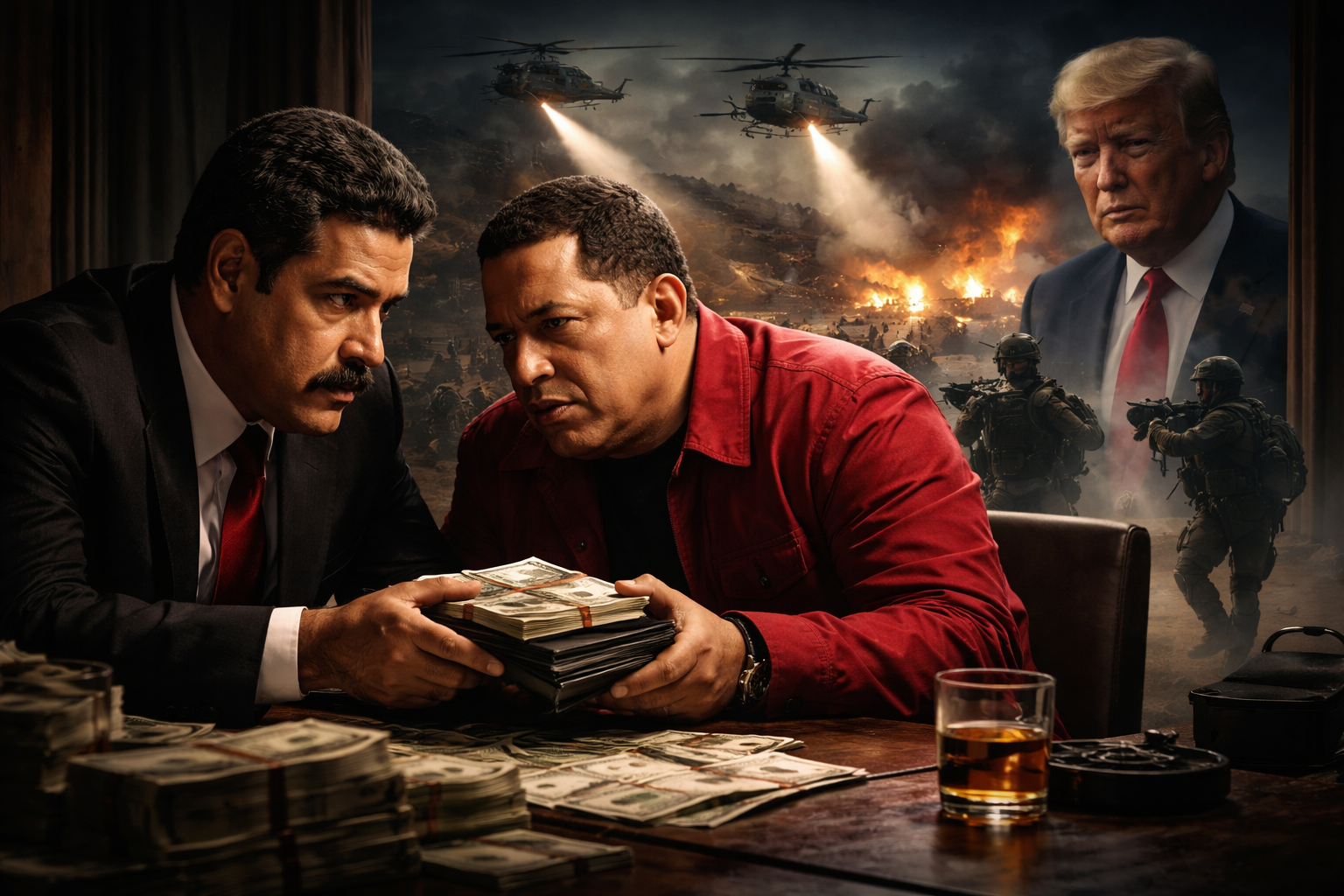
The Trump White House had already deployed sanctions, indictments, and a public bounty framework aimed at senior Venezuelan officials. The discovery of a Chávez-era pact, however, reportedly shifted tactics. Officials believed conventional pressure would fail against a system designed to withstand leadership decapitation. A targeted operation, framed as a deterrent and disruption, became thinkable. This context explains the escalation toward a deadly US airstrike narrative tied to the Chávez connection.
The Caracas Raid and the Chávez Legacy
Details surrounding the Caracas raid remain contested. Proponents claim it targeted infrastructure linked to the pact’s enforcement, including communications nodes and loyalist units. Critics counter that the operation risked civilian harm and hardened Maduro’s resolve. Regardless, the symbolism was unmistakable. By striking assets associated with Chávez’s legacy, Washington signaled that inherited authority would not shield Maduro. The message was strategic; legitimacy derived from Chávez no longer constrained US action.
Maduro’s Succession and the Secret That Backfired
Ironically, the very pact designed to guarantee succession may have exposed vulnerabilities. Defectors allege the agreement created rival centers of power and incentivized corruption to secure loyalty. As sanctions tightened, those fissures widened. Intelligence leaks multiplied. The narrative of a “Nicolás Maduro succession secret” transformed from protective myth into evidentiary liability, cited to justify extraordinary measures.
Regional Fallout and the Regime Change Debate
Latin American governments reacted cautiously. Some warned that raids undermine sovereignty; others quietly welcomed pressure on Caracas. The episode reignited debates about regime change, proportionality, and the limits of covert action. What remained consistent was the assessment that the Chávez–Maduro pact altered the strategic equation. It reframed Venezuela as a system resistant to gradual reform, thereby intensifying calls for decisive intervention.
What Comes Next
Maduro continues to rule, but under intensified scrutiny. The pact’s exposure has narrowed diplomatic options and increased the salience of enforcement actions. For Washington, the lesson was stark: hidden agreements can outlast leaders, and dismantling them requires more than rhetoric. Whether escalation achieves stability remains uncertain; what is clear is that Chávez’s shadow still shapes Venezuela’s fate.