|
Getting your Trinity Audio player ready... |
Overview: Why AI Regulation Becains a National Priority
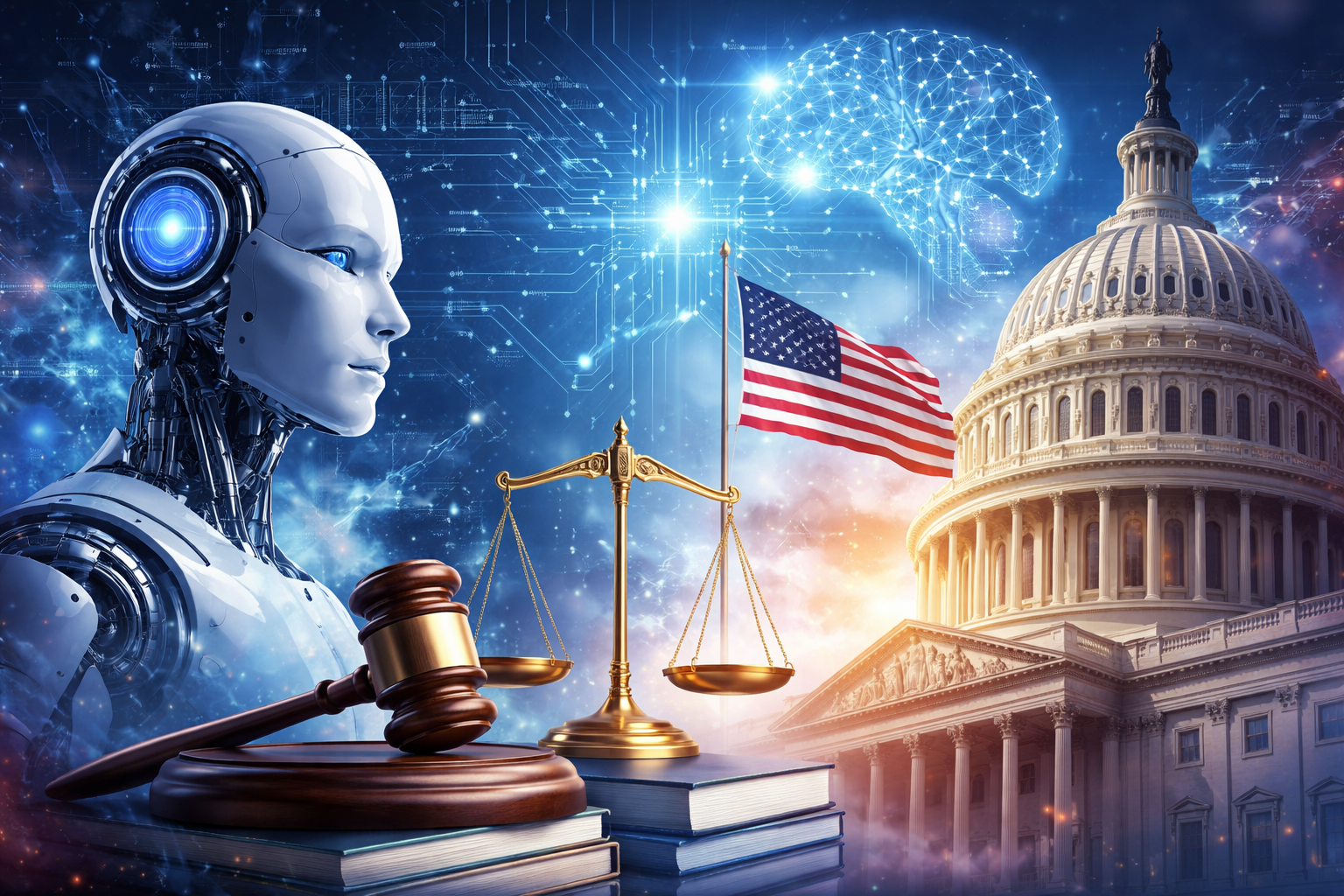
Artificial intelligence regulation in the United States has entered a critical phase in 2026 as federal authorities move from advisory frameworks toward enforceable rules. Rapid AI deployment across healthcare, finance, employment, defense, and consumer technology has created regulatory urgency. Policymakers now view AI not only as an innovation driver but also as a systemic risk vector affecting civil rights, market competition, national security, and data integrity.
The regulatory shift reflects growing concerns over opaque algorithms, biased decision-making systems, misuse of personal data, and the concentration of AI power among a small group of technology firms. Federal agencies increasingly emphasize accountability rather than voluntary compliance.
Key Federal Agencies Shaping AI Regulation
Multiple US agencies play a central role in AI governance, creating a layered regulatory environment rather than a single comprehensive AI law.
The Federal Trade Commission focuses on consumer protection, deceptive practices, and algorithmic transparency. It has expanded enforcement actions against companies deploying AI systems that misrepresent capabilities or discriminate unlawfully.
The Department of Commerce, through the National Institute of Standards and Technology, advances technical standards for trustworthy AI. These standards influence procurement policies and private-sector adoption, even when not legally binding.
The Equal Employment Opportunity Commission targets AI use in hiring, promotion, and workforce management. Automated screening tools now face scrutiny for disparate impact and discriminatory outcomes.
National security agencies address risks related to advanced AI models, export controls, and foreign access to high-performance computing infrastructure.
Core Regulatory Themes Emerging in 2026
US AI regulation in 2026 coalesces around several dominant themes shaping compliance strategies.
Transparency and Explainability
Developers are increasingly required to disclose when AI systems influence decisions affecting individuals. This includes credit approvals, hiring outcomes, medical recommendations, and content moderation. Black-box systems face higher regulatory risk.
Bias and Fairness Audits
Regulators expect companies to test AI models for discriminatory outcomes before deployment. Bias mitigation is no longer treated as an ethical aspiration but as a legal necessity, particularly in employment and financial services.
Data Governance and Privacy
AI systems trained on personal or sensitive data must demonstrate lawful data sourcing and usage. Regulators closely examine consent mechanisms, data retention policies, and cross-border data transfers.
Human Oversight and Accountability
Federal guidance emphasizes that AI-assisted decisions require meaningful human review. Automated decision-making without recourse mechanisms increasingly attracts enforcement attention.
Impact on Technology Companies and Startups
The regulatory environment affects large technology firms and startups differently, reshaping competitive dynamics.
Large technology companies possess legal, compliance, and technical resources necessary to absorb regulatory costs. Many integrate compliance-by-design into AI development, positioning regulation as a barrier to entry for competitors.
Startups face greater challenges. Compliance requirements increase development timelines and operational expenses. Venture capital firms now evaluate regulatory readiness alongside technical innovation before funding AI-driven startups.
As a result, consolidation accelerates in certain AI segments, particularly enterprise AI, healthcare analytics, and financial automation.
Sector-Specific Regulatory Pressure
AI regulation does not apply uniformly across industries. Risk-based approaches prioritize high-impact sectors.
In healthcare, AI diagnostic tools and clinical decision systems face strict validation requirements. Regulators demand evidence of accuracy, bias control, and patient safety.
In finance, algorithmic credit scoring, fraud detection, and trading systems are subject to fairness, explainability, and systemic risk oversight.
In employment, automated hiring tools must comply with civil rights laws. Employers deploying AI screening systems increasingly face legal exposure.
Consumer-facing AI, including generative models and recommendation engines, attracts scrutiny for misinformation, manipulation, and psychological harm.
Economic and Innovation Implications
Critics argue that heavy regulation risks slowing innovation and reducing US competitiveness. Supporters counter that predictable rules enhance trust, adoption, and long-term economic value.
From an economic perspective, regulation reallocates innovation toward compliance-aligned AI development. Investment shifts from experimental deployments toward enterprise-grade, auditable systems.
Internationally, US policy increasingly aligns with global regulatory trends, reducing fragmentation but intensifying competition with jurisdictions offering regulatory clarity earlier.
Enforcement Trends and Legal Exposure
Enforcement actions in 2026 increasingly rely on existing laws rather than new AI-specific statutes. Consumer protection laws, civil rights statutes, and data privacy regulations form the legal backbone of AI enforcement.
Penalties include fines, mandatory system modifications, data deletion orders, and operational restrictions. Reputational damage amplifies financial risk, particularly for consumer-facing platforms.
Litigation risk also grows as individuals and advocacy groups challenge AI-driven decisions through courts rather than regulatory channels.
Outlook: What Comes Next for AI Regulation in the US
The trajectory of AI regulation in the United States suggests incremental tightening rather than sweeping legislation. Federal agencies expand authority through guidance, enforcement, and interagency coordination.
Future developments likely include clearer model classification systems, stricter controls on high-risk AI applications, and expanded reporting obligations for advanced models.
For businesses, regulatory compliance becomes a strategic function rather than a legal afterthought. AI governance, documentation, and ethical risk management increasingly determine market viability.
In 2026, AI regulation in the US no longer debates whether to regulate but focuses on how rigorously and how consistently enforcement will be applied.