|
Getting your Trinity Audio player ready... |
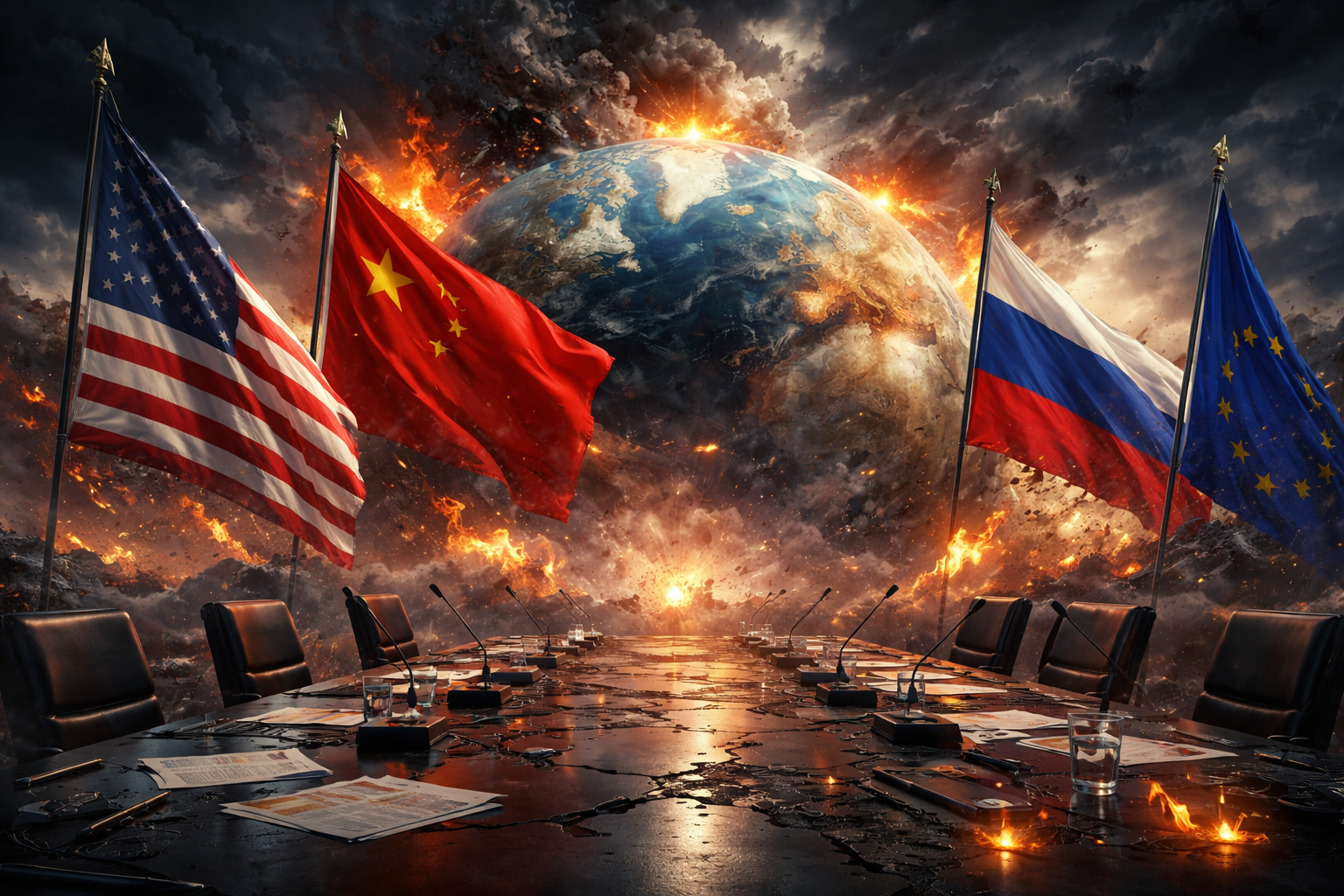
International political tensions have entered a more volatile phase in 2026, shaped by weakened diplomatic norms, power competition, and domestic instability across multiple regions. Traditional mechanisms for conflict resolution are under pressure as governments increasingly prioritize strategic dominance and internal political survival over multilateral cooperation.
Major Power Rivalries Intensifying
Relations among major powers continue to deteriorate, driven by competing economic models, military posturing, and ideological divergence.
Key areas of tension include:
- United States and China rivalry over technology, trade dominance, and regional influence
- Russia and Western alliances amid ongoing sanctions and security standoffs
- Strategic recalibration by middle powers seeking autonomy from traditional blocs
These rivalries are increasingly expressed through economic coercion, diplomatic signaling, and proxy alignments rather than direct confrontation.
Middle East as a Persistent Flashpoint
The Middle East remains one of the most politically sensitive regions in 2026. Ongoing conflicts, unresolved territorial disputes, and external interventions contribute to sustained instability.
Key drivers include:
- Iran’s regional influence and nuclear-related tensions
- Shifting alliances involving Israel and Gulf states
- Fragile political settlements in conflict-affected countries
Diplomatic engagement in the region is constrained by mutual distrust and domestic political pressures within key states.
Global Protests and Domestic Political Pressure
Internal political instability has become a major driver of international tension. Economic stress, inequality, and governance challenges have triggered protest movements across several countries.
Observable patterns include:
- Government crackdowns increasing international scrutiny
- Protest movements influencing foreign policy positions
- Migration pressures linked to political unrest
Domestic instability often spills into international relations, limiting leaders’ ability to pursue compromise-based diplomacy.
Erosion of Multilateral Institutions
Multilateral institutions face declining credibility and enforcement capacity in 2026. Political divisions among member states weaken collective responses to crises.
Key concerns include:
- Reduced effectiveness of international mediation efforts
- Selective compliance with international agreements
- Paralysis within global governance bodies during crises
As institutional trust declines, unilateral action becomes more common, increasing systemic risk.
Economic Statecraft and Sanctions
Economic tools have become central instruments of political pressure. Sanctions, export controls, and trade restrictions are now routine elements of foreign policy.
Notable developments:
- Expanded use of financial sanctions targeting strategic sectors
- Retaliatory trade measures escalating economic fragmentation
- Increased pressure on neutral states to align politically
While effective in signaling intent, these measures often produce long-term economic distortions.
Diplomatic Strategies in a Fragmented World
Diplomacy in 2026 is increasingly transactional. Long-term partnerships are replaced by issue-specific cooperation.
Emerging diplomatic approaches include:
- Flexible coalitions focused on narrow objectives
- Quiet backchannel negotiations to avoid public escalation
- Strategic ambiguity to manage domestic political constraints
This environment favors tactical maneuvering over comprehensive conflict resolution.
Indicators to Monitor in 2026
Several indicators will shape the trajectory of global political tensions:
- Frequency of diplomatic breakdowns and expulsions
- Expansion of sanctions regimes
- Escalation of protest-linked foreign policy shifts
These signals provide early warning of broader systemic instability.