|
Getting your Trinity Audio player ready... |
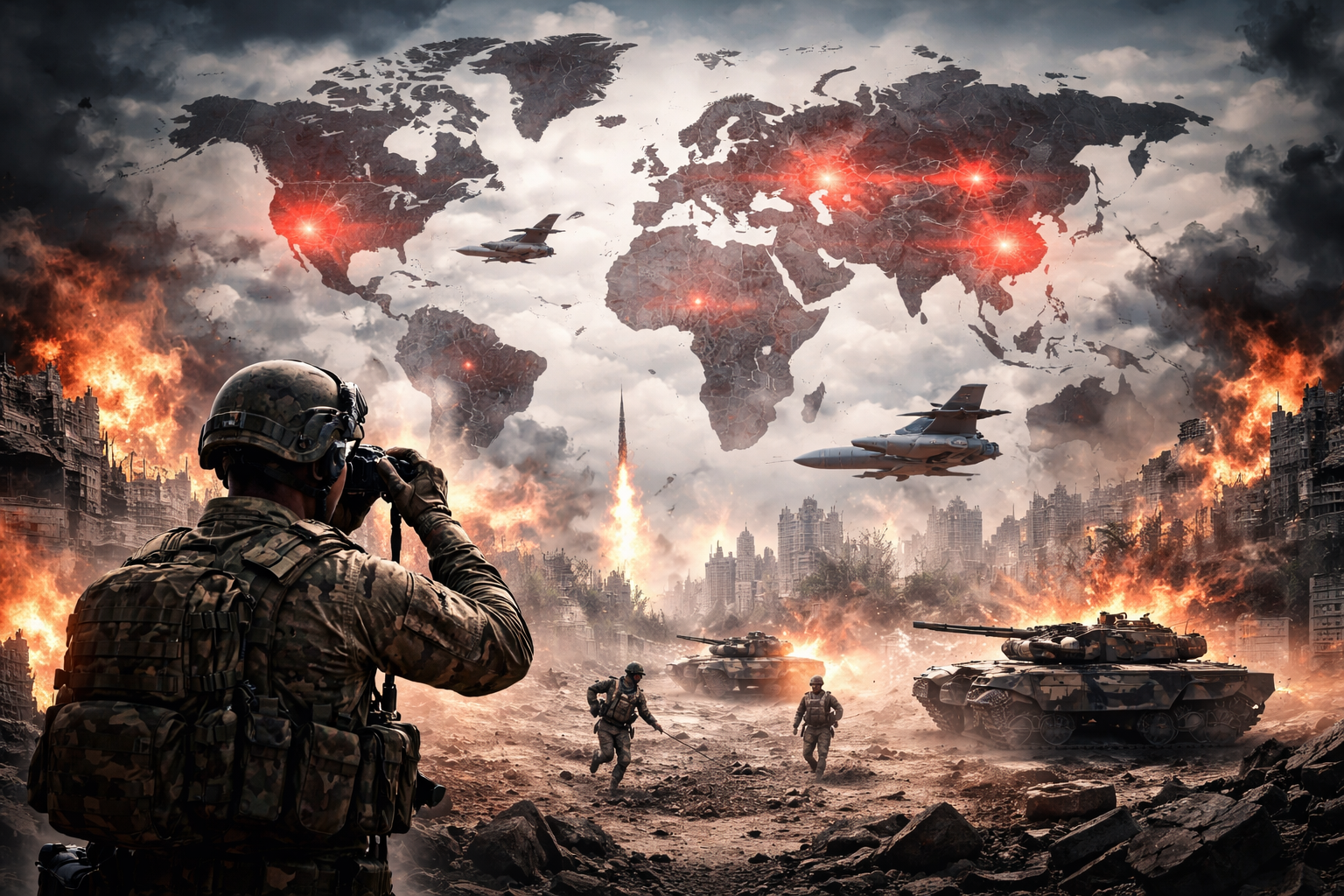
The year 2025 marked a decisive escalation in global conflicts, reshaping international relations and exposing deep fractures in the post-Cold War order. Multiple regions experienced sustained warfare, proxy confrontations intensified, and diplomatic institutions struggled to contain violence. As 2026 begins, understanding the scope and drivers of these conflicts is essential for policymakers, businesses, and citizens alike.
Major Active Conflict Zones in 2025
Several regions dominated global conflict headlines due to scale, intensity, and geopolitical consequences.
Eastern Europe:
The Ukraine war continued with high-intensity combat, drawing prolonged military and financial involvement from NATO countries. Energy infrastructure attacks and shifting frontlines increased economic instability across Europe.
Middle East:
The Gaza conflict expanded regional tensions, affecting trade routes and diplomatic alignments. Escalatory risks involving Iran, Israel, and neighboring states remained a central concern for global security.
Africa:
Sudan’s civil war became one of the world’s most severe humanitarian crises. Armed factions, foreign interests, and resource control disputes prolonged instability across the Sahel and Horn of Africa.
These conflicts collectively displaced millions, strained global aid systems, and redirected defense spending worldwide.
Rising Geopolitical Tensions Beyond War Zones
Not all conflict in 2025 involved active warfare. Strategic competition intensified across economic, technological, and ideological domains.
Key pressure points included:
- US–China rivalry over technology, Taiwan, and global trade influence
- Russia–NATO relations marked by military posturing and sanctions
- Indo-Pacific security concerns involving South China Sea disputes
Cyber warfare, disinformation campaigns, and economic coercion became routine tools of statecraft, blurring the line between peace and conflict.
Global Power Shifts and Alliance Realignments
The conflict landscape of 2025 accelerated structural changes in global power dynamics.
- Defense alliances strengthened as countries reassessed security dependencies
- Energy supply chains shifted away from conflict-exposed regions
- Emerging powers adopted more assertive foreign policies
Multipolarity became more pronounced, reducing the effectiveness of traditional diplomatic frameworks and increasing regionalized conflict management.
Economic and Humanitarian Consequences
The economic impact of global conflicts in 2025 was substantial.
Key consequences included:
- Higher energy and food prices due to disrupted supply chains
- Increased military expenditure diverting funds from social development
- Refugee flows placing pressure on neighboring states and Europe
Humanitarian agencies reported funding gaps as crises multiplied faster than international responses.
Outlook for 2026: Risk Containment or Escalation
Entering 2026, global conflict risks remain elevated. While diplomatic initiatives continue, structural drivers such as resource competition, ideological polarization, and climate stress persist.
Critical indicators to watch include:
- Ceasefire sustainability in Ukraine and Gaza
- Expansion of regional proxy conflicts
- Military modernization trends among major powers
Without coordinated international engagement, localized conflicts risk cascading into broader confrontations.
Global conflicts in 2025 underscored a world transitioning into a more volatile and fragmented security environment. Wars are no longer isolated events; they are interconnected stress points within a fragile global system. Monitoring these dynamics is essential not only for governments but for global economic stability and long-term peace prospects.