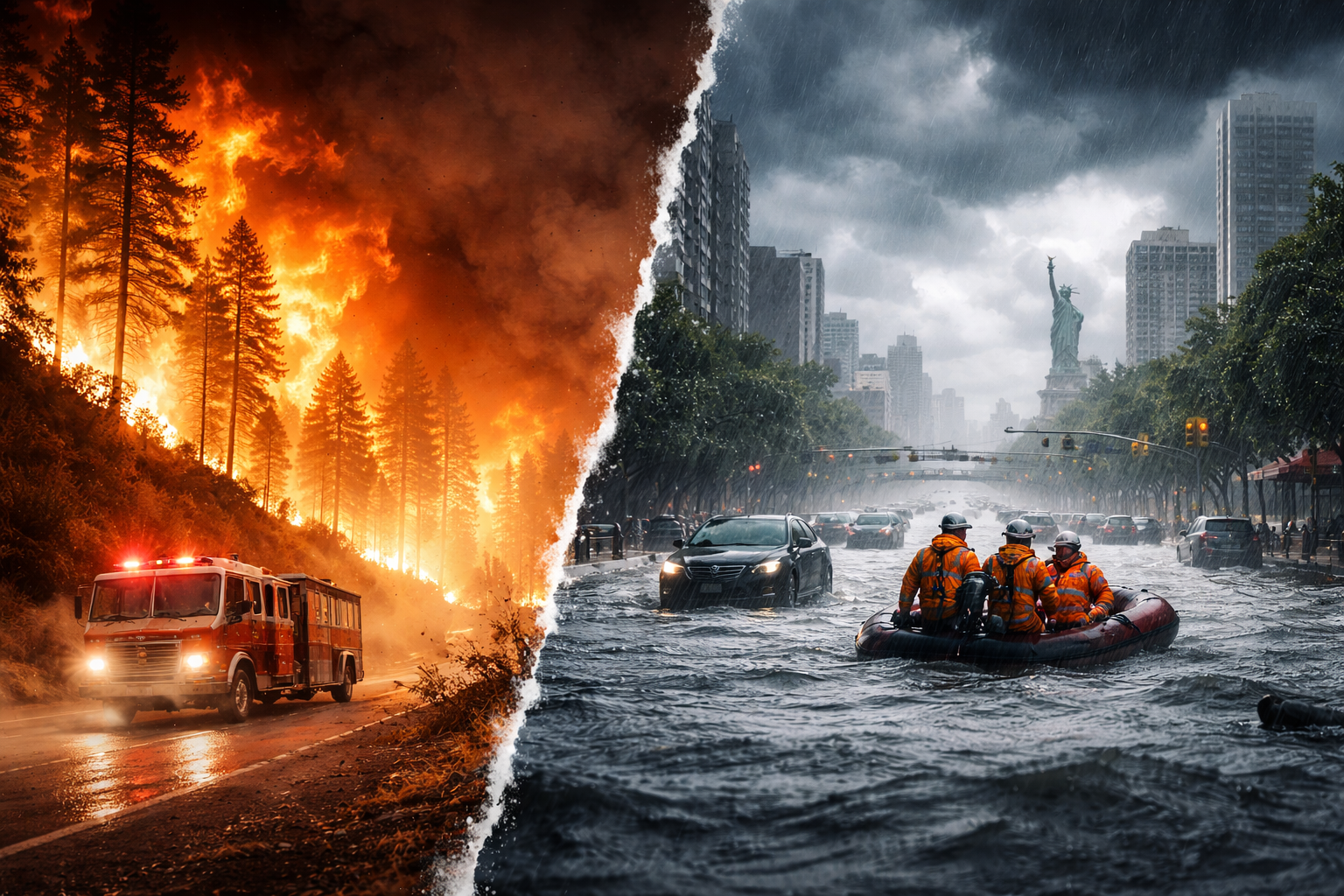
If you’ve noticed your homeowners insurance premiums skyrocketing, watched friends evacuate from wildfires, or experienced unprecedented flooding in your neighborhood, you’re not alone. Extreme weather United States residents once considered rare is now becoming disturbingly routine. The question isn’t whether climate change USA is real it’s how much it’s already costing you and what comes next.
The New American Weather Reality
From coast to coast, climate change is reshaping the American landscape in ways that hit your wallet, threaten your property, and disrupt your daily life. This isn’t abstract environmental theory it’s the concrete reality of rising insurance premiums, evacuation orders, and billion-dollar disasters becoming annual events rather than once-in-a-generation occurrences.
California Wildfires: When Fire Season Never Ends
California’s wildfire crisis has evolved from a seasonal concern to a year-round nightmare. What used to be predictable fire seasons now stretch across most of the year, with global warming America contributing to unprecedented drought conditions and record-breaking temperatures that turn forests into tinderboxes.
The financial toll is staggering. Homeowners in fire-prone areas face insurance premiums that have doubled or tripled in recent years, while major insurers like State Farm and Allstate have stopped writing new policies in certain California regions altogether. Property values in high-risk zones are declining as buyers factor in the real cost of climate risk.
For the average California homeowner, this means difficult choices: pay astronomical insurance rates, go without coverage, or sell and relocate. The economic ripple effects extend far beyond individual households, affecting local tax bases, business investments, and community stability.
Texas Heatwaves: Breaking Records and Power Grids
Texas heatwaves have transformed from uncomfortable summer weather into deadly infrastructure crises. Recent summers have seen temperatures exceed 110°F for weeks at a time, straining the state’s power grid to breaking points and resulting in tragic loss of life.
The 2021 winter storm that crippled Texas demonstrated that US climate disasters aren’t limited to heat extreme cold events are also intensifying. The economic cost of that single event exceeded $200 billion, with thousands of insurance claims for burst pipes, property damage, and business interruption.
Energy bills for Texas residents have surged as air conditioning becomes not a luxury but a survival necessity. Businesses face operational challenges when extreme heat forces outdoor work stoppages, and the agriculture sector battles unprecedented drought that threatens the state’s massive cattle and crop industries.
Florida Hurricanes: Stronger, Wetter, More Expensive
Florida hurricanes have become more intense and destructive as warming ocean temperatures fuel stronger storms. Hurricane Ian in 2022 caused over $112 billion in damages, making it one of the costliest US climate disasters in history. But Ian wasn’t an anomaly it’s part of a disturbing trend.
The insurance crisis in Florida has reached critical levels. Multiple carriers have gone insolvent, while others have withdrawn from the market entirely. The state-backed insurer of last resort, Citizens Property Insurance, has seen its policy count explode, creating a potential financial time bomb for taxpayers if a major hurricane strikes.
For Florida homeowners, the climate change USA reality means property that was once considered prime real estate is now viewed as high-risk investment. Coastal properties face declining values as buyers factor in not just hurricane risk but also rising sea levels and increased flooding.
Midwest Flooding: When Hundred-Year Floods Happen Every Few Years
The Midwest flooding crisis exposes how extreme weather United States communities thought they understood has fundamentally changed. River systems from the Mississippi to the Missouri are experiencing “500-year floods” multiple times per decade.
Agricultural losses from flooding cost American farmers billions annually, driving up food prices for everyone. Infrastructure damage to roads, bridges, and water treatment facilities requires massive FEMA spending and local tax increases. Entire communities in floodplains face impossible decisions about whether to rebuild or relocate.
The economic impact extends beyond immediate flood damage. Crop insurance rates are rising, farmland values are adjusting to new climate realities, and supply chain disruptions from flood events ripple through the national economy.
The Real Cost: Your Money, Your Future
The financial impact of global warming America is already reshaping the US economy in tangible ways:
Insurance Markets in Crisis: Homeowners insurance premiums have increased 20-40% in high-risk states, with some properties becoming essentially uninsurable through private markets. This creates a hidden tax on homeownership in climate-vulnerable regions.
FEMA Spending Explosion: Federal disaster spending has tripled over the past decade, shifting taxpayer dollars from infrastructure investment and other priorities to emergency response and recovery. Every American ultimately pays for US climate disasters through federal taxes, regardless of where they live.
Housing Market Instability: Property values in high-risk areas are beginning to reflect true climate risk, creating potential losses for homeowners who purchased before this reality set in. Meanwhile, climate refugees within the US are driving up housing costs in supposedly safer regions.
Infrastructure Strain: Aging American infrastructure wasn’t designed for the climate we’re experiencing now. Upgrading roads, bridges, power grids, and water systems to handle extreme weather United States faces will cost trillions over coming decades.
What This Means for You
Understanding climate change USA isn’t about accepting doom it’s about making informed decisions. Whether you’re buying property, planning retirement, making career moves, or raising children, climate considerations are now financial considerations.
Consider where you live and work through a climate risk lens. Research your property’s flood, fire, and storm risk ratings. Review your insurance coverage and understand what’s actually protected. Factor climate resilience into major life decisions.
The extreme weather that’s becoming America’s new normal isn’t waiting for national policy debates to resolve. It’s happening now, affecting real people’s lives and livelihoods across every state. The sooner Americans recognize this reality and adapt accordingly, the better positioned we’ll be to protect our families, our finances, and our futures.
The question isn’t whether climate change will affect you it’s how you’ll prepare for the changes already underway.