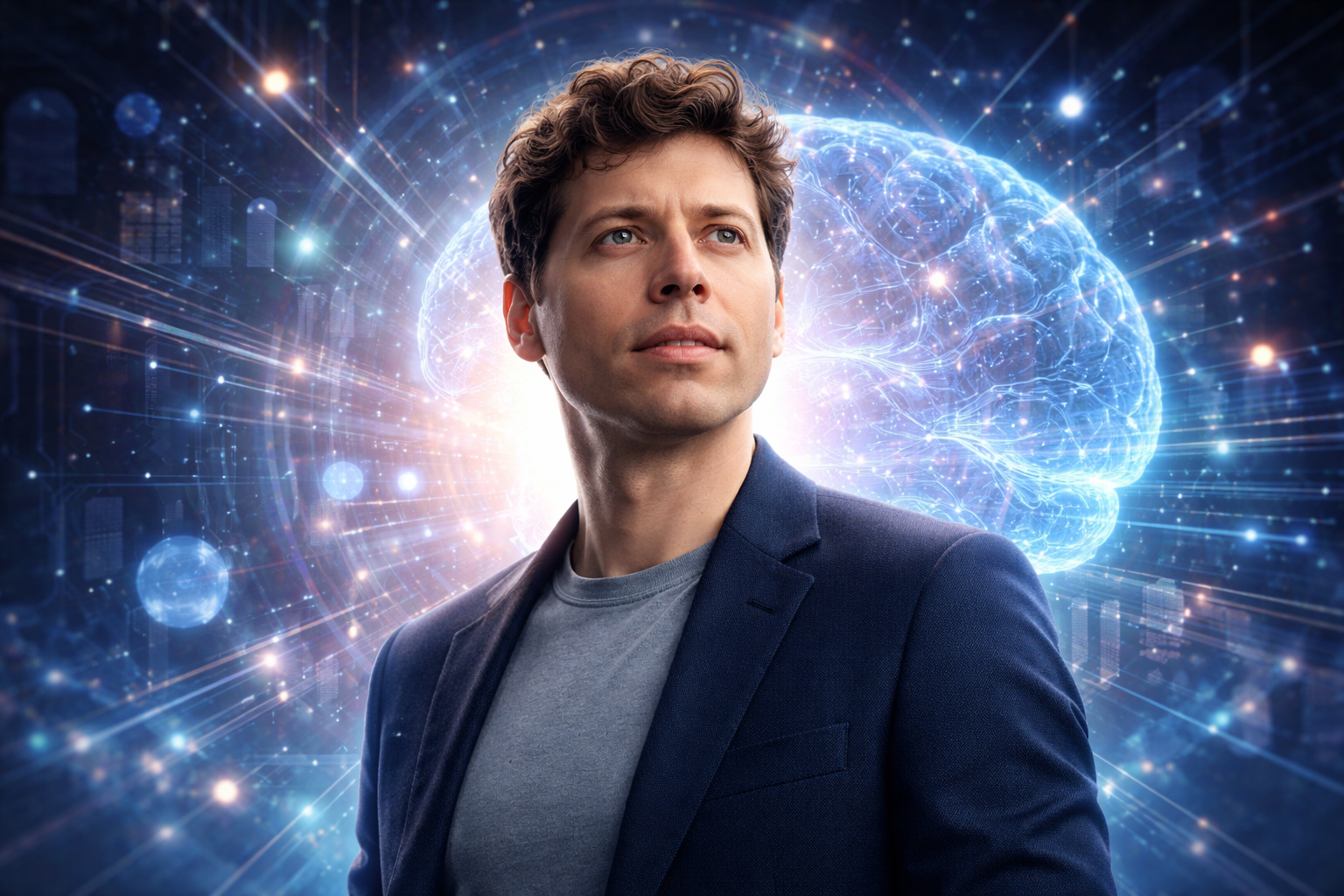
The Early Spark: From Chicago to Stanford
Samuel Harris Altman was born on April 22, 1985, in Chicago, Illinois. His journey into the world of technology began exceptionally early; at just eight years old, he received his first computer, an Apple II, which he quickly learned to program and take apart. This early exposure to the “innards” of technology fostered a mindset that would eventually lead him to build some of the most complex systems in human history.
Altman attended Stanford University to study computer science, but in a move reminiscent of other tech titans, he dropped out in 2005 at the age of 19. His departure was fueled by his first entrepreneurial venture, Loopt, a location-based social networking app that was part of the very first cohort of the startup accelerator Y Combinator. Although Loopt was later acquired by Green Dot Corporation for $43.4 million, it served as the ultimate training ground for Altman’s future as a venture capitalist and leader.
Leading the Startup Ecosystem: Y Combinator
After Loopt, Altman’s influence in Silicon Valley skyrocketed. In 2014, he was handpicked by Paul Graham to become the president of Y Combinator (YC). Under his leadership, YC expanded its reach, funding thousands of companies and focusing on “hard tech” sectors like biotech and energy. Altman became known as a visionary who looked for “exponential” growth, a philosophy he would soon apply to the most ambitious project of his life: Artificial General Intelligence (AGI).
The Birth of OpenAI and the AI Boom
In 2015, Altman co-founded OpenAI alongside Elon Musk, Greg Brockman, and other prominent tech figures. Originally established as a non-profit research lab, the goal was to ensure that AI would benefit all of humanity. However, the massive compute power required for modern AI led Altman to transition the company into a “capped-profit” model, a controversial but successful move that secured billions in investment from Microsoft.
The release of ChatGPT in late 2022 was a watershed moment, turning Altman into a global household name. Since then, he has overseen the release of DALL-E 2 for image generation and the groundbreaking text-to-video model, Sora, in early 2024. By 2025, Altman has become the face of the AI era, navigating the complex balance between rapid innovation and the necessity for global regulation.
2025: The Year of Stargate and Superintelligence
The year 2025 has been a defining one for Altman. He has spearheaded the “Stargate” project, an unprecedented $500 billion collaboration with Microsoft to build the world’s largest AI supercomputer. This facility is designed to provide the sheer “brute force” needed to achieve the next frontier of intelligence.
As of late 2025, Altman continues to serve as the CEO of OpenAI, having successfully navigated internal boardroom dramas to emerge as one of the most powerful figures in the tech world. He is frequently seen on the global stage from TED conferences to government hearings advocating for a future where AI agents manage our daily lives and help solve the world’s most pressing challenges.
Legacy and Vision
Sam Altman’s biography is not just about a businessman; it is the story of a man who believes we are at the “dawn of the intelligence age.” Whether he is discussing the potential for AI to generate wealth or the existential risks it poses, Altman remains a central figure in the 21st-century narrative. His life stands as a testament to the power of thinking big and the relentless pursuit of the next great technological shift.