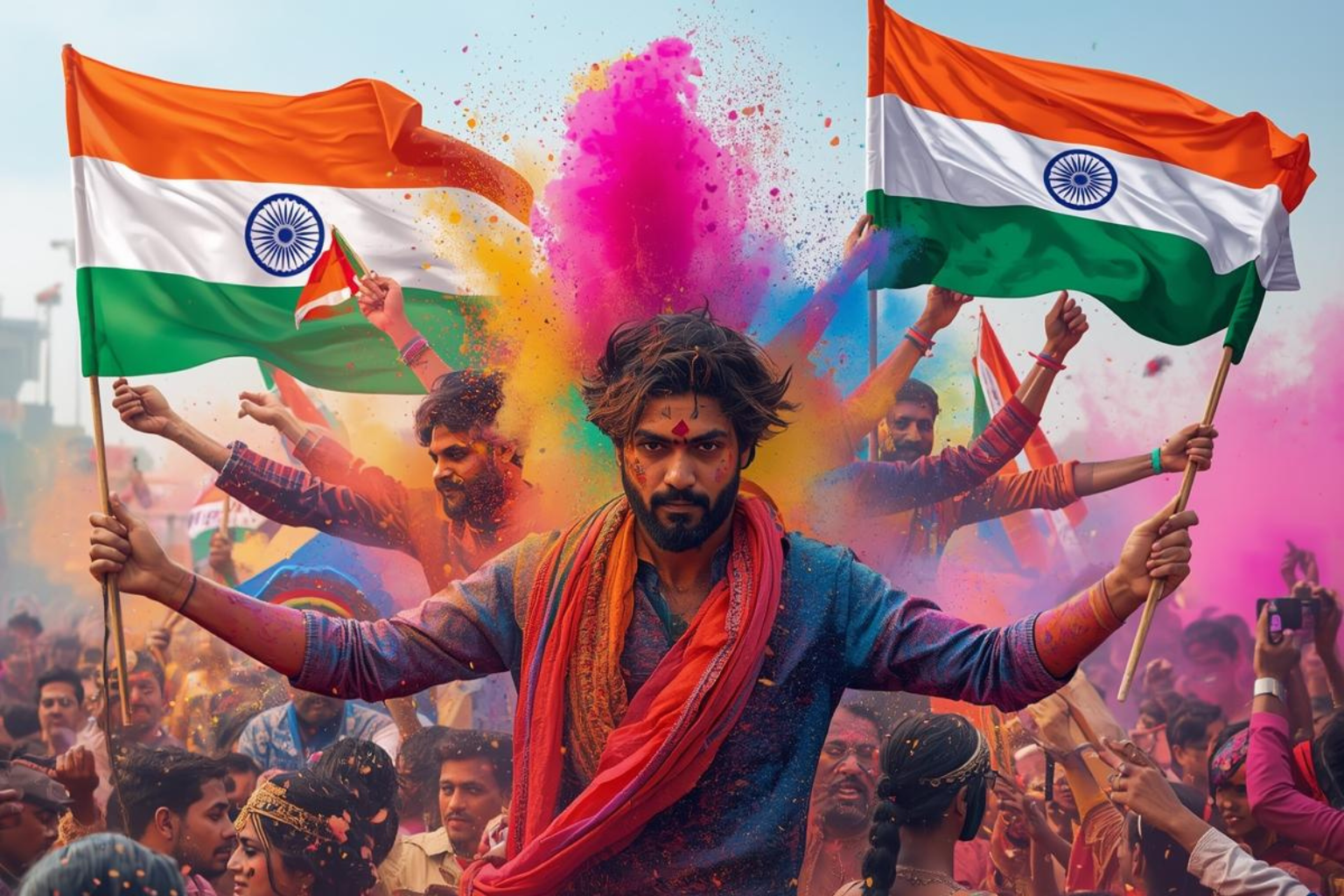
Indian nationalism and culture have long been intertwined, shaping identity, language, traditions, and collective memory. Historically, nationalism in India emerged as a unifying force against colonial rule, drawing strength from cultural diversity rather than uniformity. In recent years, however, the relationship between nationalism and culture has entered a more contested phase, raising a critical question: does cultural pride strengthen democracy, or does it risk becoming a mechanism of social control?
At its core, Indian nationalism and culture are rooted in plurality. India’s civilizational history reflects coexistence across religions, regions, languages, and customs. From Bhakti and Sufi traditions to regional folk practices, culture evolved organically, without rigid enforcement. Nationalism, in this sense, was inclusive; it mobilized people through shared aspirations of freedom, dignity, and self-rule rather than strict cultural conformity.
The contemporary discourse, however, suggests a shift. Cultural symbols, rituals, and narratives are increasingly framed as loyalty markers. Expressions such as language preference, dietary habits, historical interpretations, or modes of dress are often politicized. In this environment, Indian nationalism and culture are sometimes presented as fixed templates rather than evolving traditions. This reframing raises concerns about whether patriotism is being measured through personal belief and participation, or through visible compliance.
Supporters of this cultural assertiveness argue that it restores pride after centuries of subjugation. They claim that reaffirming traditional values protects national identity in a globalized world where cultural homogenization is a real threat. From this perspective, Indian nationalism and culture act as stabilizing forces, reinforcing social cohesion and continuity. Cultural confidence, they argue, is not exclusionary but necessary for self-respect and sovereignty.
Critics, however, point to the risks of overreach. When culture becomes prescriptive, dissent can be misinterpreted as disloyalty. This dynamic blurs the line between patriotism and policing. In democratic societies, nationalism ideally allows space for disagreement, reinterpretation, and critique. When cultural norms are enforced through moral pressure or legal instruments, nationalism risks losing its emancipatory character.
The media and digital platforms have amplified this tension. Simplified narratives thrive online, often reducing complex cultural debates into binary choices. Indian nationalism and culture are portrayed either as unquestionable virtues or as tools of domination, leaving little room for nuance. Viral outrage cycles reward conformity and punish deviation, reinforcing the idea that national loyalty must be publicly performed.
Historically, Indian constitutional values provide a counterbalance. The Constitution does not define nationalism in cultural terms alone; it emphasizes liberty, equality, and fraternity. Culture, within this framework, is protected but not mandated. This distinction is crucial. Indian nationalism and culture, when aligned with constitutional principles, function as complementary forces. When culture overrides constitutional freedoms, the balance tilts toward control rather than cohesion.
The economic and social dimensions further complicate the issue. Cultural debates often overshadow pressing concerns such as employment, education, and healthcare. By centering nationalism on cultural identity alone, structural inequalities risk being reframed as moral or cultural failures. This redirection can weaken accountability and reduce space for policy-driven discourse.
A sustainable vision of Indian nationalism and culture requires restraint as much as pride. Cultural traditions gain strength through voluntary participation, adaptation, and dialogue. Loyalty to a nation is not proven through uniform behavior but through commitment to shared civic values. Nations endure not because everyone behaves identically, but because differences coexist within a stable political framework.
Ultimately, the question is not whether culture matters; it undeniably does. The question is whether culture is being used to inspire or to discipline. Indian nationalism and culture can either remain dynamic expressions of a diverse society or harden into loyalty tests that divide rather than unite. The direction chosen will shape not only political discourse but the everyday experience of citizenship in India.