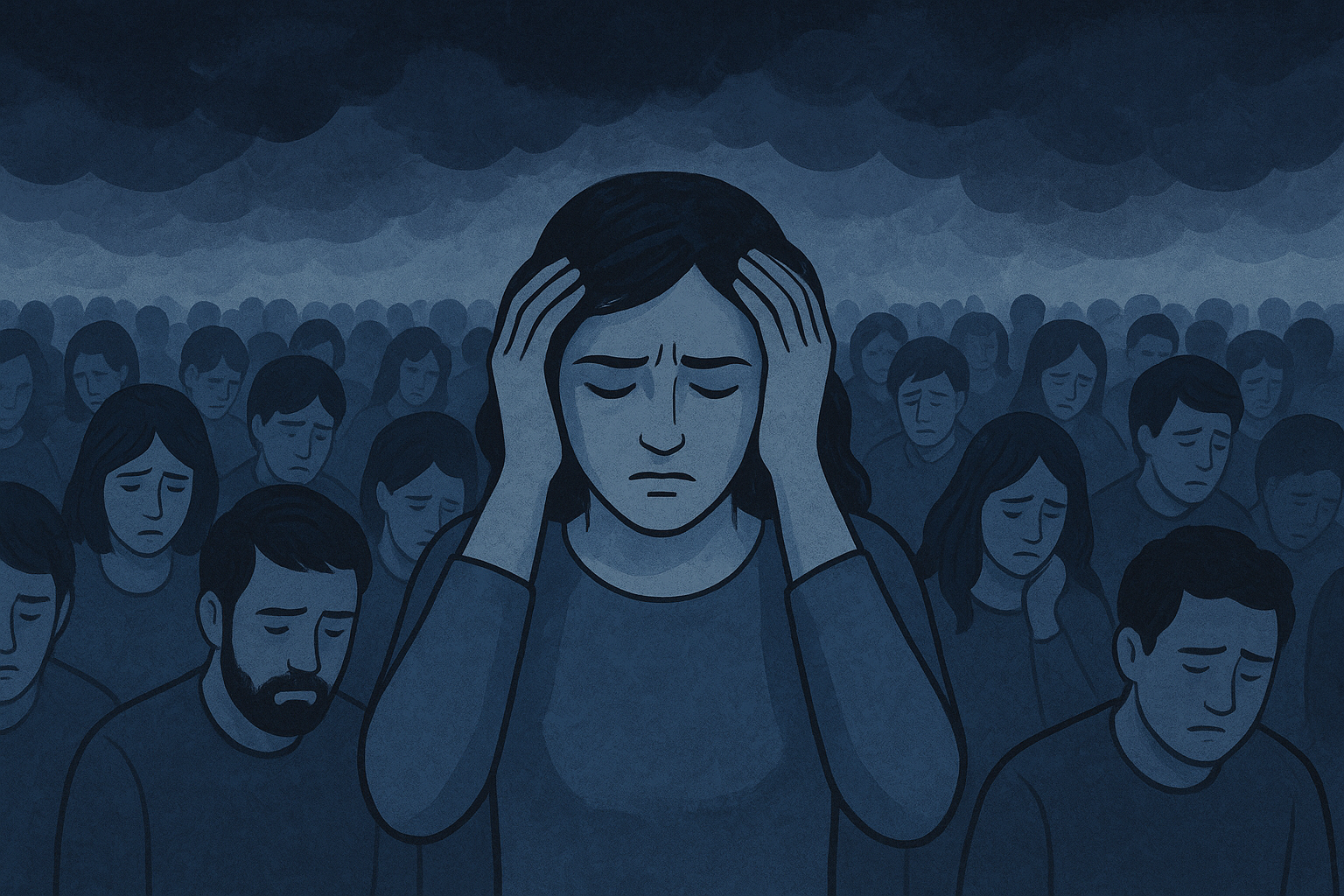
In an unprecedented global health emergency, more than one billion individuals worldwide are grappling with mental health disorders, yet fewer than half receive adequate care a crisis that’s silently reshaping societies across every continent.
Staggering Statistics Reveal Mounting Crisis
The global mental health crisis has reached alarming proportions, with the World Health Organization reporting that depression and anxiety statistics have surged dramatically in recent years. Mental health conditions now affect one in every eight people globally, making psychological disorders among the most prevalent health challenges of our generation.
Depression has emerged as a leading cause of disability worldwide, impacting approximately 280 million people. Meanwhile, anxiety disorders affect 301 million individuals, with numbers continuing to climb. The COVID-19 pandemic accelerated these trends, triggering a 25% increase in depression and anxiety cases during the first year alone.
Understanding the Mental Health Treatment Gap
Perhaps most concerning is the mental health treatment gap the chasm between those who need mental healthcare and those who actually receive it. According to the WHO mental health report, more than 70% of people with mental health conditions in low and middle-income countries receive no treatment whatsoever. Even in high-income nations, nearly 50% of those affected go untreated.
This treatment gap stems from multiple factors: inadequate funding for mental health services, shortage of trained professionals, persistent stigma, and lack of integration between mental health and primary healthcare systems. Global spending on mental health averages just 2% of healthcare budgets, despite mental disorders accounting for a substantial portion of the disease burden.
Stress-Related Disorders on the Rise
Stress-related disorders have become increasingly prevalent in modern society, driven by economic uncertainty, workplace pressures, social media influence, and global events. Conditions including post-traumatic stress disorder (PTSD), adjustment disorders, and burnout syndrome are affecting populations across all demographics.
Young people face particularly acute challenges. Suicide ranks as the fourth leading cause of death among 15-29-year-olds, while half of all mental health conditions begin by age 14. Depression anxiety statistics among adolescents have reached crisis levels, with many experiencing symptoms before adulthood.
Economic and Social Impact
The global mental health crisis carries enormous economic consequences. Mental health conditions cost the global economy approximately $1 trillion annually in lost productivity. Depression and anxiety alone result in 12 billion lost working days each year, affecting businesses, families, and entire communities.
Beyond economics, untreated mental health conditions strain relationships, increase substance abuse rates, and elevate risks of chronic physical diseases. The interconnection between mental and physical health means addressing this crisis is essential for overall population wellbeing.
Breaking Down Barriers to Treatment
Addressing the mental health treatment gap requires comprehensive strategies. Experts emphasize several critical interventions: integrating mental health services into primary care, training more mental health professionals, implementing community-based care models, and launching public awareness campaigns to reduce stigma.
Digital mental health solutions offer promising avenues for expanding access, particularly in underserved regions. Teletherapy, mental health apps, and online support communities are bridging gaps, though concerns about quality and privacy remain.
Call for Global Action
The WHO mental health report calls for urgent, coordinated international response. Recommendations include increasing mental health funding, strengthening policies and legislation, promoting mental health awareness, and ensuring human rights protections for people with mental health conditions.
Several countries have pioneered successful models. Community mental health programs in Ethiopia, school-based interventions in Australia, and workplace mental health initiatives in the United Kingdom demonstrate that effective, scalable solutions exist.
Moving Forward
As the global mental health crisis deepens, affecting one billion people and counting, the imperative for action has never been clearer. Mental health is not a luxury it’s a fundamental component of overall health and human rights. Closing the treatment gap, addressing stress-related disorders, and tackling depression anxiety statistics requires commitment from governments, healthcare systems, employers, and communities worldwide.
The question is no longer whether we can afford to invest in mental health, but whether we can afford not to.