Lead
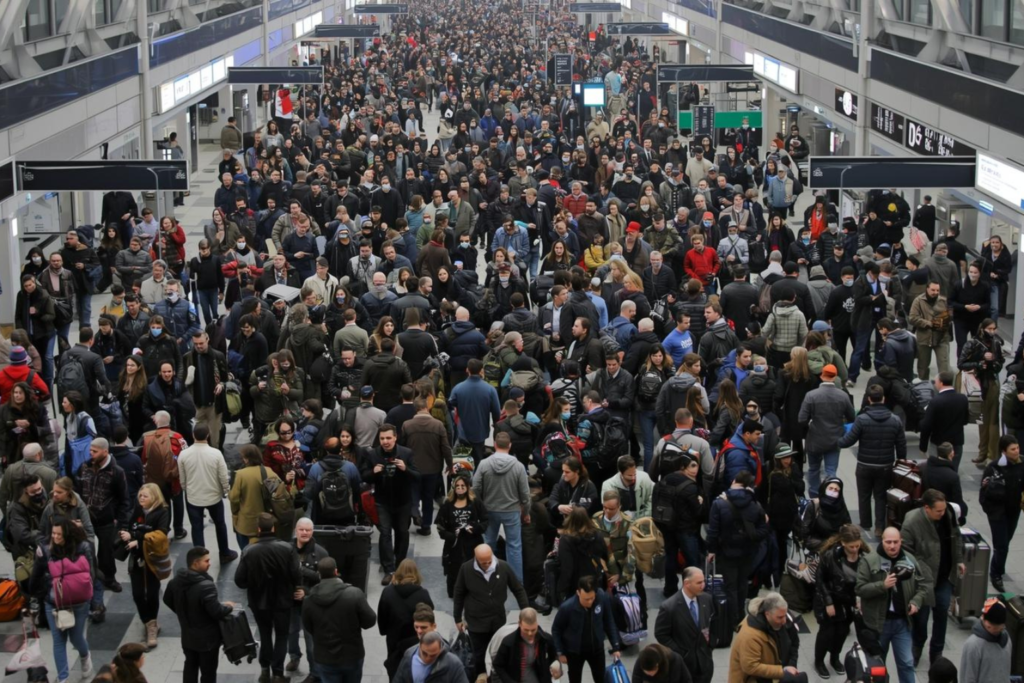
U.S. airports registered the highest holiday travel volume in five years as security checkpoints, terminal operations, and airline networks experienced sustained pressure across major hubs. The Transportation Security Administration reported a new peak in passenger screenings, prompting nationwide advisories and operational adjustments to maintain flight schedules.
Key Developments
Record Screening Numbers:
TSA confirmed that passenger traffic during the holiday week surpassed pre-pandemic levels. Several single-day screenings crossed the 2.8 million mark; officials stated that the surge reflects renewed consumer confidence and expanded domestic route availability.
Major Hubs Under Strain:
Airports in Atlanta, Los Angeles, Chicago, Dallas, and Denver noted extended wait times during early morning and evening peak hours. Operational data indicated that security queues averaged fifteen to twenty five minutes; select hubs crossed the forty minute threshold during simultaneous banked departures.
Airline Capacity Increases:
Airlines deployed additional narrow-body and wide-body aircraft on high-demand routes, primarily across the East Coast, West Coast, and Midwest corridors. Capacity growth reached nearly twelve percent compared with last year. Carriers increased staffing at check-in counters and baggage halls to stabilize throughput.
Operational Challenges
Weather-Driven Disruptions:
Severe winter systems in the Northeast and central states generated delays and limited cancellations. FAA issued ground delay programs at multiple airports to manage runway flow rates; this measure slowed departures but preserved safety margins during reduced visibility and wind shear episodes.
Infrastructure Bottlenecks:
Older terminal facilities in select mid-tier airports struggled with crowd density. Aviation analysts warned that passenger surges demonstrate the widening gap between traffic growth and infrastructure upgrades. Federal modernization projects remain underway; however, several airports require accelerated expansion plans to absorb projected 2026 demand.
Baggage Handling Stress Points:
High passenger loads increased pressure on baggage conveyors. Airlines deployed contingency staff in sorting units to reduce misplacement rates. Early reports show that baggage mishandling remained under one percent, which officials described as a stable performance during peak travel stress.
Government and Industry Response
TSA Resource Reallocation:
Officers were reassigned from low-volume airports to major hubs. Advanced screening lanes processed travelers more efficiently; airports with computed tomography scanners reported reduced recheck rates and improved throughput.
FAA Traffic Flow Adjustments:
The agency implemented structured flow management programs across the National Airspace System. These measures balanced departures and arrivals at overloaded hubs, preventing wide-scale cascading delays.
Airline Preparedness Briefings:
Carriers coordinated with federal agencies for real-time weather modelling, crew scheduling, and gate optimization. Industry briefings emphasized that despite congestion, the system demonstrated resilience under the heaviest load since 2019.
Passenger Behavior Trends
Travel analysts identified several behavior shifts:
- Early arrivals increased across all age groups
- Reservation data indicated strong demand for last-minute domestic bookings
- Mobile boarding pass usage exceeded ninety percent
- Passengers prioritized nonstop routes to reduce transfer uncertainties
Consumer confidence metrics show that leisure travel is driving most of the surge, while business travel remains stable but below its 2019 peak.
Economic Impact
Airline revenue during the holiday period is projected to rise by eight to eleven percent due to elevated seat occupancy and improved ancillary sales. Airports reported increased commercial spending in concession areas; duty-free transactions grew significantly in international terminals.
Tourism councils noted that strong holiday mobility will influence local economies in destination cities. Hospitality occupancy forecasts indicate elevated bookings in Florida, Nevada, California, New York, and Texas.
Safety and Advisory Updates
TSA encouraged travelers to use digital identification lanes wherever available. FAA recommended proactive monitoring of flight status due to weather volatility. Airport authorities advised travelers to allocate additional time for parking, check-in, and security procedures, particularly in high-density metropolitan hubs.