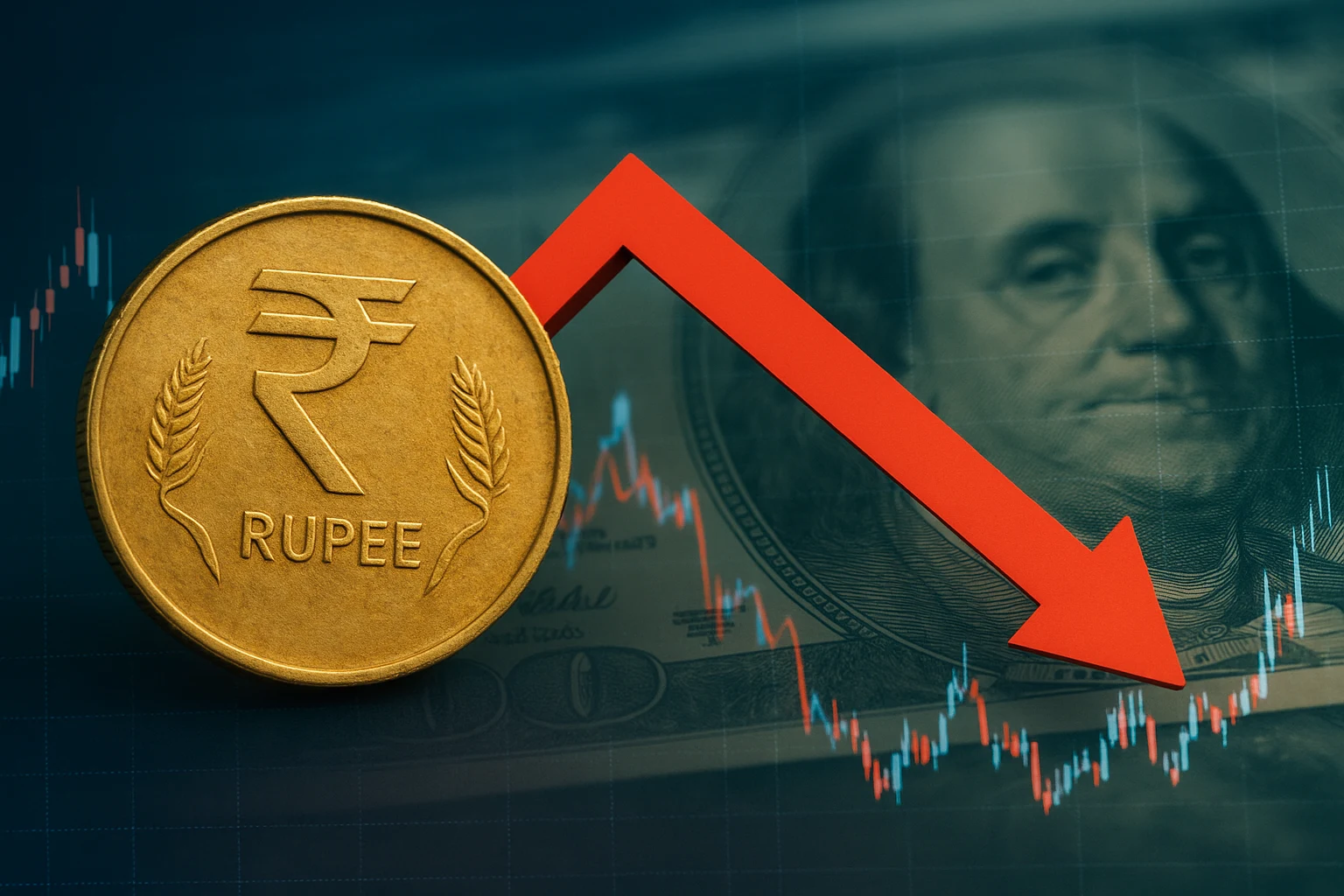
India’s currency market has entered a phase marked by persistent volatility. The Indian Rupee has been navigating downward pressure driven by global economic shifts, evolving investor sentiment, and domestic macroeconomic adjustments. The current environment shows a gradual weakening of the currency relative to major global denominations, particularly the United States Dollar. Although such depreciation is not unprecedented, the velocity and timing have intensified policy scrutiny and market debate. An assessment of the contributing variables clarifies the underlying structural and cyclical forces at play.
ALSO READ – Is the Next Altcoin Boom Underway? What Market Signals Say in Late November 2025
Global Drivers Influencing the Rupee
A key influence on the Rupee’s trajectory is the global monetary landscape. Several advanced economies have adopted interest rate positions designed to curb inflation. Higher interest rates in those markets attract capital that might otherwise flow into emerging economies. Investors often shift to assets classified as safer, especially when geopolitical risks escalate or when inflation threatens long term stability. This reallocation reduces foreign investment inflows into India and places downward pressure on the Rupee.
Additionally, global crude oil benchmarks maintain a direct link to the currency’s value. India’s heavy reliance on imported petroleum increases its vulnerability. When crude prices rise sharply, the import bill expands and the current account deficit widens. Forex outflows then intensify and the Rupee responds with depreciation. The sensitivity is immediate because oil transactions settle in USD, amplifying dollar demand in the domestic market.
ALSO READ – The Official Ranking: Top 10 Richest Countries in the World by GDP Per Capita
Domestic Economic Indicators
While global triggers set the broad direction, domestic indicators determine the pace and resilience of the currency. India’s inflation data continues to guide the Reserve Bank of India’s monetary stance. If inflation stays elevated, the RBI must maintain a vigilant policy posture. Higher inflation erodes purchasing power and signals structural bottlenecks that could weaken investor confidence. Conversely, stable inflation can create room for calibrated interventions that support currency stability.
The nation’s trade performance also plays a central role. A widening trade deficit increases forex outflows and constrains the Rupee’s ability to recover. Export competitiveness, import volumes, and global demand cycles collectively shape this metric. In periods where export growth lags due to weak external demand, the Rupee becomes more exposed to depreciation pressures.
Capital Flows and Investor Sentiment
Foreign portfolio investments exert a substantial impact on daily currency movements. Equity and bond markets attract global investors seeking yield. When these investors perceive higher risk in the domestic environment or better returns abroad, capital exits the Indian market. Even small and rapid outflows can alter the currency’s short term direction. Sentiment driven selling amplifies these moves. The absence of strong counterbalancing inflows further magnifies volatility.
On the other hand, consistent long term foreign direct investment lends stability. FDI inflows signal confidence in structural growth potential. They are less sensitive to short term market noise. Sustained FDI can moderate depreciation trends by strengthening the forex buffer and improving liquidity. Current patterns suggest that while FDI remains stable, equity market volatility continues to prompt intermittent outflows.
RBI Intervention and Policy Measures
The Reserve Bank of India routinely assesses the forex market and intervenes when volatility threatens economic stability. Intervention strategies include selling dollars to support the Rupee or adjusting liquidity conditions to influence currency movement indirectly. The RBI’s objective is not to fix the currency at a particular level but to prevent disorderly fluctuations. Effective intervention provides market participants with clarity and confidence.
Policy adjustments also play a stabilizing role. Measures such as easing inflow norms, modifying interest rate expectations, or enhancing hedging mechanisms can cushion sudden depreciation cycles. Transparent communication from policymakers further reduces speculative pressure by guiding market expectations.
Impact on Businesses and Consumers
Rupee depreciation affects stakeholders differently. Import driven industries such as electronics, aviation, and pharmaceuticals face increased operational costs because they rely on foreign sourced inputs. Cost escalation can lead to price hikes that affect consumers. On the export side, sectors like IT services, textiles, and manufacturing benefit from improved competitiveness because foreign clients pay in stronger currencies. This duality forms a natural shock absorber for the economy.
For consumers, overseas education, travel, and foreign purchases become more expensive. Households may delay international plans due to higher costs. Businesses engaged in global supply chains must adjust procurement strategies and hedge currency exposure to protect margins.
Short Term and Long Term Outlook
In the short term, the Rupee is expected to remain sensitive to US Federal Reserve policy, global inflation trends, and crude oil movements. The likelihood of continued volatility remains high because global economic cycles are undergoing transition. Market participants should expect swift reactions to macroeconomic announcements and geopolitical developments.
Over the long term, India’s stable growth trajectory, expanding digital economy, and improvements in manufacturing competitiveness provide foundational strength. Strategic policy reforms, increased domestic production, and export diversification can reduce external vulnerabilities. These long term elements will gradually enhance the Rupee’s resilience even if short term fluctuations persist.
The depreciation of the Indian Rupee reflects a confluence of global transitions and domestic adjustments. Currency performance remains a critical indicator of economic momentum and global confidence. While present trends suggest ongoing volatility, structural strengths and policy interventions provide an anchor for eventual stabilization. Continuous evaluation of global cues, domestic indicators, and sectoral impacts is essential for understanding the trajectory of India’s currency market.