
AST SpaceMobile, the company building a space-based cellular network, says it will build its own rocket. The company announced on Friday, November 6, that it will develop a reusable launch vehicle called Blacklift to carry its BlueBird satellites, according to Via Satellite, SpaceNews and Payload. Ars Technica also covered it, with a headline that the launch market must be tough when satellite companies start building rockets.
The rocket. The company describes Blacklift as a 20-ton, reusable rocket that can carry up to five BlueBird satellites per launch. The first flight is targeted for late 2028. According to the coverage, no launch site, no first-flight date beyond that target and no price per launch has been disclosed.
The engines. Firefly Aerospace will supply the engines, which are called Miranda. Under a three-year agreement, Firefly will deliver 36 rocket engines to AST for the first three Blacklift rockets, according to the reports. Reported figures put the deal at about $1.3 billion, and one account says AST would pay about $800 million upfront in cash and shares, so the payment structure is described differently between outlets.
Why AST is doing it. Launch access has been a bottleneck. AST’s plan to deploy its constellation, which aims to connect directly to ordinary phones, has been slowed by launch vehicle delays, according to the coverage. Building its own rocket is meant to reduce dependence on others, including SpaceX, as 24/7 Wall St. puts it.
What continues in the meantime. Until the first Blacklift flight, AST will keep relying on external launch providers, according to the reports. AST also filed the announcement with the US Securities and Exchange Commission, according to search results.
The skeptical view. The rocket does not exist yet, and the late-2028 target is ambitious, since new rockets often slip. Coverage also notes the cost burden of a capital-intensive rocket program for a company that is still deploying satellites. Ars Technica’s headline frames the move as a sign of desperation over launch availability, which is an editorial view and not a company statement.
Why it matters. The satellite industry depends on a small number of launch providers, and a company that builds its own rocket is taking on a very different business from running a phone network. If it works, AST would control its schedule and costs. If it does not, the program could drain money and attention from satellites. Customers in the US and UK waiting for direct-to-phone satellite service will be watching the satellite launches more than the rocket.
What to watch. Look for the launch site, engine tests, the first-flight schedule, AST’s financing for the program, and the pace of BlueBird launches on outside rockets.
Sources: Via Satellite, SpaceNews and Payload, with the Ars Technica headline noted. Details come partly from search summaries and are as reported by those outlets and AST SpaceMobile.
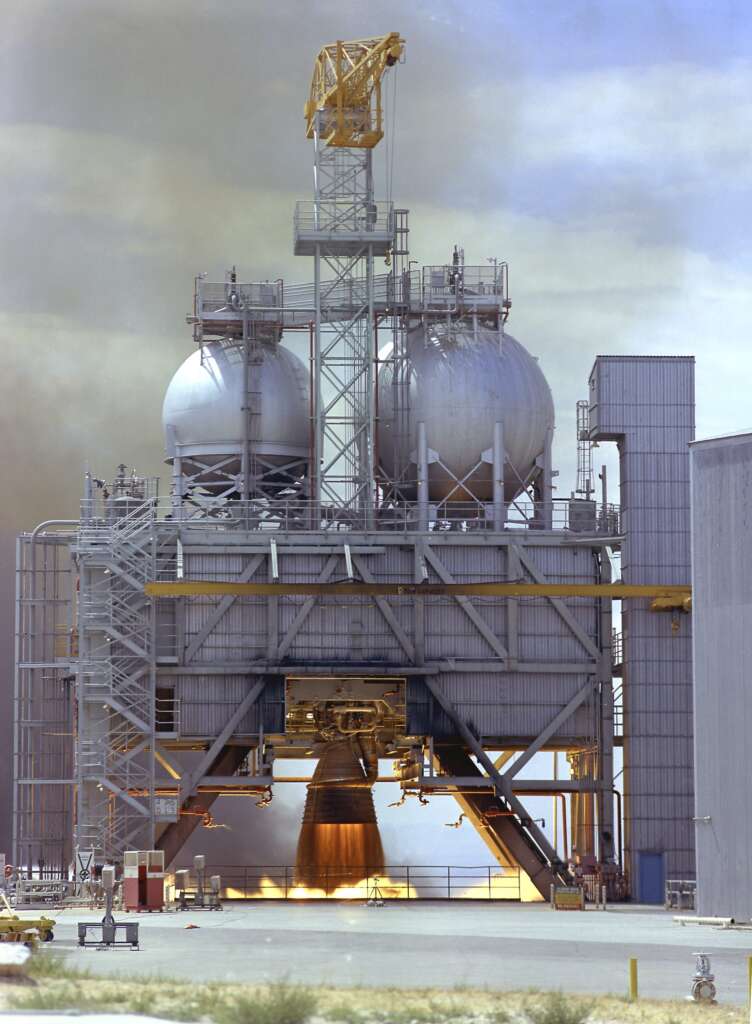
Rocket engine test firing (representative image), Wikimedia Commons, public domain