Binance has started letting customers withdraw their crypto again, days after a record theft of about $6.3 billion. The exchange said early on Sunday, November 1, that withdrawals would restart in phases, and the FBI has now named a North Korean group as responsible, according to TechCrunch and CNBC.
How the restart is going. Binance said the order of restoration depends on the network and the asset. TechCrunch says the exchange’s status page on Sunday morning showed a mix of normal, partially suspended and fully suspended services. Bitcoin withdrawals and deposits were partly suspended, while Ethereum deposits were normal and Ethereum withdrawals were partly suspended. Users were warned to expect temporary delays or longer processing times because of traffic volume. Search coverage of the restart lists Bitcoin, Ethereum, BNB, XRP, Base, Dogecoin and Optimism among the assets restored first, with Bitcoin coming back at 06:20 UTC.
The outflow. TechCrunch reports that between 6am and 3:30pm UTC Binance processed $4.6 billion in withdrawals and $1.0 billion in deposits. That left a net outflow of $3.6 billion, or 2.1% of total assets under management. CNBC reports a similar figure of about $3.64 billion. The outflow shows that some customers moved money out as soon as they could, but it is a small share of the total held on the exchange.
Covering the loss. Binance says it has covered 95% of the stolen assets and is still buying the remainder, which are less liquid and take longer to source at the needed scale. The company says it will absorb the financial impact and will not pass losses on to users. Reports differ on the earlier figure: one report says the covered share was 90% in a previous update. The company also plans to publish a more detailed incident report once its investigation is complete.
The FBI attribution. Binance had earlier pointed to North Korean hackers, and security firms TRM Labs and Elliptic reached the same view. On Saturday, October 31, the FBI said a North Korean group known as TraderTraitor was responsible. The agency said the group was converting stolen assets mainly into Ethereum and that further laundering was likely. That moves the attribution from private security firms to a US government statement.
What Binance says it was doing. The exchange described the freeze as a precaution to contain losses, assess the impact, restore services and complete security checks. Its initial investigation had pointed to a compromised laptop belonging to a DevOps engineer, though it is still unclear how that machine was compromised.
Why it matters. For customers, the main question is whether the promised cover holds and whether the delayed incident report explains how one laptop could reach systems that moved billions of dollars. For the wider industry, the FBI statement and the scale of the theft raise the pressure on exchanges in the US and UK to show how they protect staff devices and withdrawal systems. Binance says user funds are safe, but a full incident report and an updated proof of reserves are what many users will be waiting for.
What to watch. Look for the remaining assets coming back online, how much of the frozen money is recovered, the detailed incident report, and any further US government action on the laundering.
Sources: TechCrunch and CNBC, with figures as reported by Binance and the FBI. This is not financial advice.
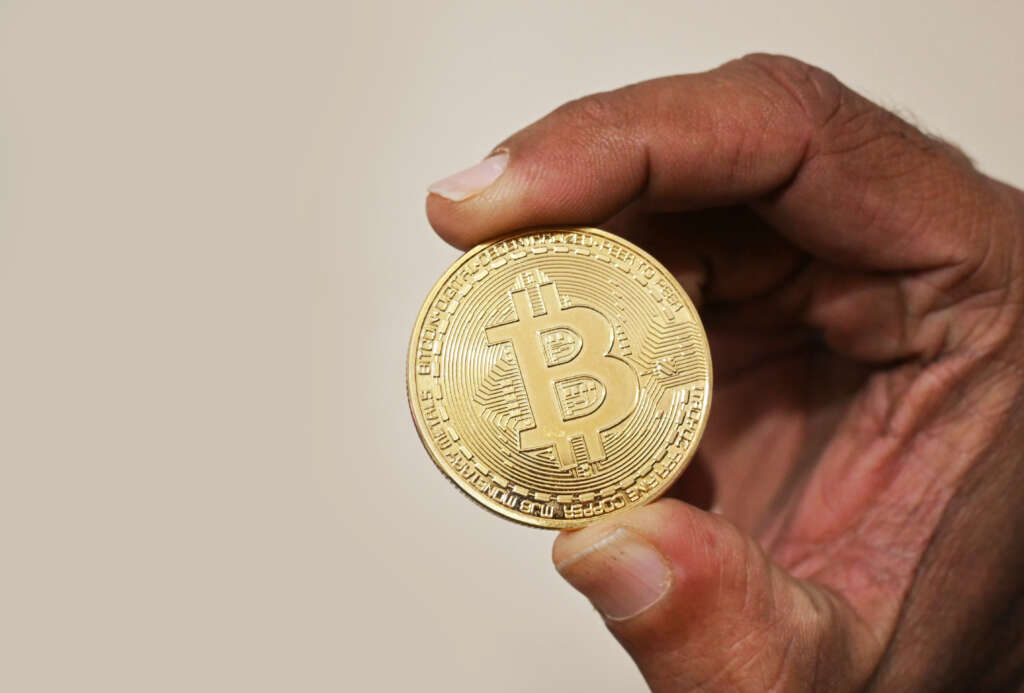
Holding a bitcoin coin (representative image), Wikimedia Commons, CC BY 2.0